Glass Printing Sizes, Costs and Custom Options
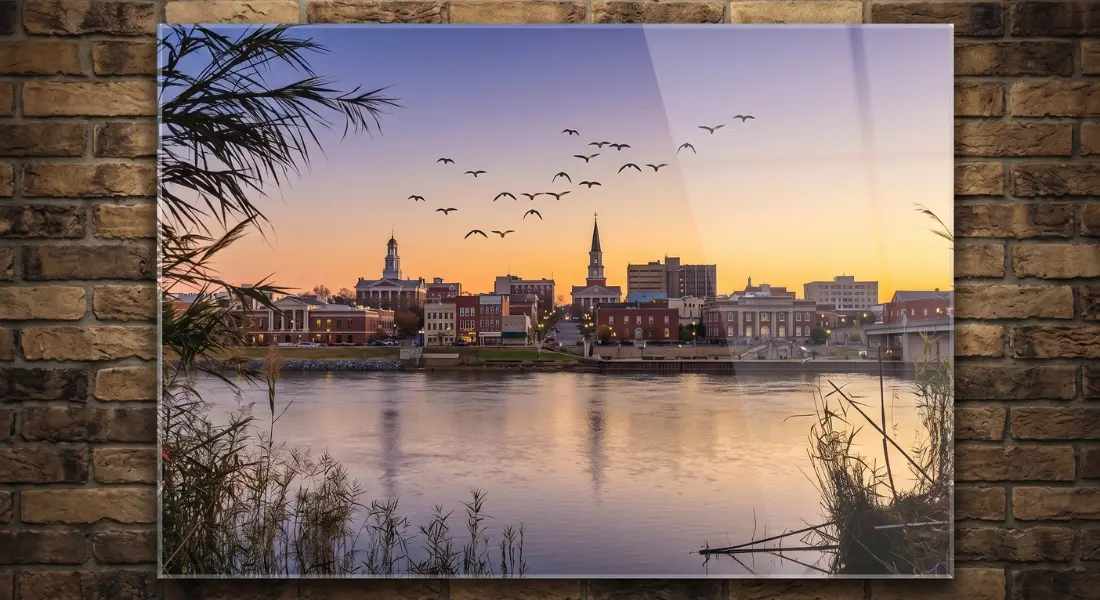
Custom glass printing puts a logo, graphic, pattern or artwork directly onto a glass panel — a storefront, an office partition, a privacy screen, a decorative panel or a branded interior feature. Because every one of those is built to the project rather than pulled off a shelf, there is no menu price. This guide covers what determines the size of a printed glass panel, what drives its cost, and what a fabricator needs from you to quote it.
What does custom glass printing cost?
Printed glass is quoted per project, not per unit. Cost is driven by the panel dimensions, the glass type and thickness the application requires, how much of the surface is printed, the complexity of the artwork, and any fabrication and finishing the panel needs — edgework, tempering, holes, cutouts or mounting hardware.
Planning a Printed Glass Project?
Allnite Glass prints logos, graphics, decorative artwork and privacy patterns directly onto glass for homes and businesses in Clarksville and Middle Tennessee.
See Glass Printing ServicesWhat Is Custom Glass Printing?
Custom glass printing applies a durable image directly to the surface of a glass panel. The most common method is UV-cured flatbed printing, in which ink is deposited onto the glass and cured immediately under ultraviolet light. Ceramic frit printing, where the image is fired into the glass surface, is used where higher durability or exterior exposure is required.
The result is a single finished component: the graphic is part of the panel rather than a film applied over it. Depending on the application, the panel can be printed on the first surface (the visible face) or the second surface (the back, viewed through the glass), and it can be printed on clear, frosted, tinted or back-painted glass.
That is a different product from a consumer photo print. It is fabricated glass, specified for an installed application, and it is quoted the way fabricated glass is quoted.
What Do People Use Printed Glass For?
The applications fall into a handful of groups:
Logos and branded graphics. Company marks on entry doors, reception walls, conference-room glass and storefront windows.
Decorative glass. Artwork, imagery and patterns on interior panels, splashbacks, feature walls and cabinet glass.
Privacy patterns. Gradients, dot patterns, frosted bands and full-coverage designs that obscure sightlines while still passing light — common on office fronts, meeting rooms and interior partitions.
Office and interior panels. Printed partitions, dividers and wall cladding that carry wayfinding, branding or graphic treatments.
Storefront applications. Window graphics, hours and contact information, promotional panels and entry-door branding.
Manifestation markings. Visual markers on large clear panels so that the glass is apparent to people approaching it — frequently a code or safety requirement, and often handled as a printed pattern.
What Sizes Can Printed Glass Be?
Printed glass is cut to the opening or the application, so the practical answer is that it is made to your dimensions. What bounds those dimensions is not a size chart — it is three things:
The printing bed. A flatbed printer has a maximum panel size it can accept. Graphics larger than that are handled by splitting the design across multiple panels with a deliberate joint line.
The glass itself. Available stock sheet sizes, and the thickness required for the span, set what can be fabricated as a single panel. Larger panels generally need thicker glass.
Handling and installation. Glass is heavy, and a panel has to be transportable, liftable and installable in its final location. Doorways, stairwells, elevators and site access frequently decide panel size on larger jobs.
For projects that exceed any of these, the design is laid out across multiple panels. That is normal on partition walls and long storefront runs, and the joint lines are planned into the artwork rather than left to fall wherever.
What Affects the Cost of Printed Glass?
Several factors combine to set the price of a printed glass project:
Panel dimensions and quantity. Square footage is the starting point, and the number of panels affects both material and setup.
Glass type and thickness. Clear, low-iron, frosted, tinted or back-painted glass all price differently. Tempered glass — required in doors, partitions and most safety-glazing locations — costs more than annealed. Laminated construction adds more again.
Print coverage. A small logo on an otherwise clear panel uses far less ink and machine time than a full-coverage privacy pattern across the whole surface.
Artwork complexity. Solid single-colour marks are simpler than photographic imagery, gradients or designs requiring a white ink underbase for opacity on clear glass.
Fabrication and finishing. Edge polishing, mitres, radius corners, holes for hardware, notches and cutouts are separate fabrication operations, and each adds to the panel.
Mounting and hardware. Standoffs, channels, clips, patch fittings and frames are specified with the panel and priced with it.
Installation. Site access, working height, the weight of the panels and whether existing glass has to be removed all affect the labour side of the quote.
Because these interact — a larger panel often forces thicker and tempered glass, which in turn affects handling and installation — the only meaningful number comes from quoting the actual project.
Which Glass Type Is Used for Printing?
The glass is chosen for the application first and the print second.
Annealed glass is standard float glass. It is used where safety glazing is not required — some interior decorative panels, for example — and it breaks into sharp pieces, which limits where it can be used.
Tempered glass is heat-treated for strength and breaks into small fragments. It is required in doors, sidelights, partitions, low-level glazing and other safety-glazing locations defined by code. Important scheduling note: tempered glass cannot be cut, drilled or edged after tempering, so every dimension, hole and cutout has to be finalised before the panel is processed.
Laminated glass bonds two or more layers with an interlayer so the panel holds together if it breaks. It is specified where retention after breakage matters, and it also offers acoustic benefits.
Low-iron glass has less of the green tint present in standard float glass, so printed colours read more accurately. It is worth considering where colour fidelity matters, such as brand colours on a reception feature.
Back-painted or frosted glass can serve as the substrate, giving an opaque or diffused background for the printed graphic.
Which of these your project needs depends on where the panel is installed and what the building code requires there — a question to settle at design stage, since it affects both price and lead time.
What Artwork Do You Need to Supply?
Print quality is limited by the file it comes from, and on glass that is unforgiving because the panels are often large and viewed closely.
Vector files — AI, EPS or PDF — are ideal for logos, type, patterns and line work. They scale to any panel size without losing definition.
Raster files — TIFF, PNG or high-quality JPEG — are used for photographic content. What matters is the resolution at final printed size, not the pixel count in isolation. A file that looks sharp on screen may not hold up printed at four feet wide.
Colour. Supply brand colours as specified values (Pantone or CMYK) rather than “match this screenshot.” Colour on glass is affected by the substrate, the tint of the glass and whether a white underbase is used, so a proof or sample is worth requesting on colour-critical work.
Bleed and safe area. Artwork that runs to the edge needs bleed. Anything near hardware, holes or panel joints needs to be placed with those in mind.
If you have a concept rather than production artwork, say so early. It is far easier to set up the file correctly at the start than to rework it once panels are in fabrication.
How Does Printed Glass Compare to Applied Film or Vinyl?
Applied vinyl and window film are the common alternatives, and they are genuinely different products with different trade-offs.
Vinyl is applied to existing glass, so there is no need to replace the panel. It is well suited to temporary or seasonal messaging, changing promotions and jobs where the existing glazing stays in place. Because it is a surface-applied layer, it can be removed and changed, and it can also lift, scratch or wear at the edges over time.
Printed glass is a fabricated panel. The graphic is on or fired into the glass itself, so there is no film edge to peel and the finish is more durable. It is the stronger choice for permanent branding, architectural features and anywhere the graphic is meant to be part of the building. The trade-off is that the panel is made for that design, so changing the graphic means a new panel.
Where the glass is being replaced anyway, or where the graphic is permanent, printed glass generally makes more sense. Where the existing glazing is fine and the message will change, vinyl usually does.
What Should You Have Ready Before Requesting a Quote?
A quote comes together quickly when a fabricator has the following:
- The application — what the panel is, and where it goes. A door, a partition, a splashback and a storefront window have different requirements.
- Dimensions — panel sizes, or the opening dimensions if the glass is being made to fit.
- Quantity — how many panels, and whether the artwork differs between them.
- The artwork — production files where you have them, or a description and reference images where you do not.
- Coverage — whether the print is a small mark or covers the full panel.
- Glass preference or constraints — clear, frosted, low-iron, back-painted, or any specification already set by an architect or designer.
- Hardware and mounting — how the panel is fixed, and whether holes or cutouts are needed.
- Site conditions — access, working height, and whether existing glass has to come out.
- Timeline — any date the project has to hit, since tempering and fabrication are scheduled operations.
Photos of the existing space are genuinely useful, particularly for retrofit work.
Bring Your Glass Surfaces to Life with Custom Printing
If you want to turn ordinary glass into a custom design feature, Allnite Glass provides custom window and glass printing for both residential and commercial spaces throughout Clarksville and Middle Tennessee.
We print logos, branded graphics, decorative artwork and privacy patterns directly onto glass for signage, interior panels, partitions and privacy screens — and we fabricate, finish and install the panels ourselves. Whether you are branding a storefront or adding a design element inside your home, we will walk you through the glass, the artwork requirements and the mounting before anything goes into production.
Learn more about custom glass printing services in Clarksville, or contact the Allnite Glass team to talk through a project.
Frequently Asked Questions
How much does custom glass printing cost?
It is quoted per project. Panel dimensions, glass type and thickness, print coverage, artwork complexity, edgework and cutouts, hardware and installation all feed into the figure.
What size can a printed glass panel be?
Panels are made to your dimensions. The practical limits are the printer’s bed size, the glass thickness the span requires, and what can be transported and installed on site. Larger graphics are split across multiple panels with planned joints.
What file format should artwork be supplied in?
Vector files (AI, EPS, PDF) are best for logos, type and patterns. Photographic content should be a high-resolution raster file with enough resolution at the final printed size.
Does printed glass have to be tempered?
It depends on where it is installed. Doors, partitions and other safety-glazing locations generally require tempered glass under building code. Tempered panels must be cut, drilled and edged before tempering, so the design has to be final first.
Is printed glass better than applied vinyl?
They suit different jobs. Vinyl applies to existing glass and can be changed, which suits temporary or changing messaging. Printed glass is a fabricated panel with the graphic on the glass itself, which suits permanent branding and architectural features.
Key Takeaways
- Custom glass printing puts logos, graphics, artwork and privacy patterns directly onto a fabricated glass panel.
- Panels are made to your dimensions; printer bed size, required glass thickness and site access set the practical limits.
- Cost is driven by panel size and quantity, glass type and thickness, print coverage, artwork complexity, edgework and cutouts, hardware and installation.
- The glass type is chosen for the application and the building code, not for the print — tempered glass is required in doors, partitions and other safety-glazing locations.
- Tempered panels cannot be cut or drilled after tempering, so dimensions and cutouts must be final before fabrication.
- Vector artwork suits logos and patterns; photographic content needs sufficient resolution at the final printed size.
- Printed glass suits permanent branding and architectural features; applied vinyl suits temporary or changing messaging on existing glazing.
The Allnite Glass Team shares practical guidance based on the company's experience with custom glass fabrication and printing. Allnite Glass has served Clarksville and nearby communities since 1949.
Ready to Discuss Your Glass Project?
Tell Allnite Glass what you need, where the project is located, and whether the glass can be brought to the Clarksville shop. The team will confirm scope, availability and next steps.
Monday – Friday: 7:00 AM – 5:00 PM · Saturday – Sunday: Closed