Home Decor: What Are Odd-Shaped Mirrors and How to Use Them
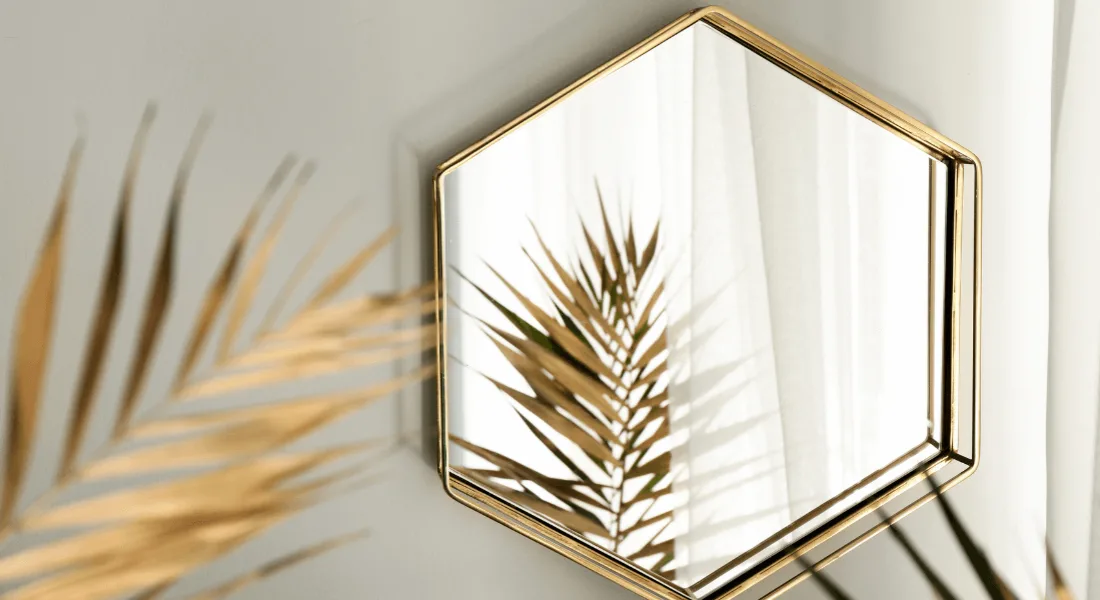
Mirrors are one of the few decor elements that are simultaneously functional and visual art. And while rectangular mirrors serve their purpose perfectly well, odd-shaped mirrors have become a dominant force in interior design — from organic blob shapes to geometric arches to dramatic custom cuts that make a wall into a focal point.
What Are Odd-Shaped Mirrors?
Odd-shaped mirrors are any mirror whose outline doesn’t follow a standard rectangular or square form. This includes:
- Arched (arch-top) mirrors: Rectangular base with a rounded arch at the top. One of the most popular shapes in transitional and traditional interior design.
- Circular and oval mirrors: Classic round forms that provide a soft counterpoint to rectangular architecture.
- Irregular organic shapes: Freeform, asymmetric outlines that mimic natural forms — stones, leaves, amoeba shapes. Very popular in modern and bohemian design.
- Hexagonal and geometric mirrors: Regular polygon shapes; strong graphic quality for contemporary spaces.
- Teardrop and pear shapes: Popular for smaller accent mirrors in clusters.
- Custom cutouts: Any arbitrary shape — from cloud silhouettes to city skylines — cut to order.
Why Odd-Shaped Mirrors Work in Interior Design
They break up visual monotony. A room full of rectangles — furniture, windows, frames — benefits from a shape that disrupts the grid.
They act as sculpture. A dramatically shaped mirror on a wall is art, not just utility. It draws the eye without competing with other decor.
They multiply light. Like all mirrors, they bounce natural light around the room, making spaces feel larger and brighter.
They add personality. A standard rectangular mirror reads as “functional.” An interesting shape reads as “intentional” — signaling that the space was designed with care.
Popular Places to Use Odd-Shaped Mirrors
Entryway / foyer: The classic location for a statement mirror. An oversized arched or circular mirror over a console table transforms an entryway from transitional to designed.
Living room wall gallery: Clustering several irregular mirrors of different sizes creates a dynamic wall installation. Mix organic shapes with geometric ones for visual interest.
Bathroom vanity: An arched mirror (instead of a standard rectangle) over a vanity immediately elevates the space. For double-sink vanities, two arched or circular mirrors flanking the center can be more interesting than one long horizontal mirror.
Bedroom accent wall: A large leaned mirror (floor mirror) in an irregular shape creates a designer element without requiring installation.
Dining room: A large mirror on the wall of a dining room (opposite windows) expands the perceived space and multiplies candlelight or evening lighting dramatically.
Home office / library: Small clusters of hexagonal or geometric mirrors as a design element behind the desk.
Getting Custom-Shaped Mirrors
Mass-market mirrors come in limited shapes. For truly custom forms, you need a glass shop that can cut mirror to order.
At a professional glass shop, you can provide:
- A drawing or template of the shape you want
- Dimensions for shapes that can be described mathematically (arches, circles, hexagons)
- A paper template for organic or freeform shapes (trace the outline onto kraft paper, cut it out, bring it to the shop)
The glass shop then cuts the mirror glass to shape and applies the appropriate edge treatment — typically a polished edge for display mirrors.
Common edge treatments:
- Flat polish: Clean, smooth edge with no angle. Most common for framed mirrors.
- Beveled polish: A 1”–1.5” angled facet ground around the perimeter, adding visual depth and a decorative element. Very popular for frameless display mirrors.
- Seamed edge: A light sanding of the edge to remove sharpness. Used for mirrors that will be framed or won’t have the edge in view.
How Much Do Custom-Shaped Mirrors Cost?
At Allnite Glass in Clarksville, pricing for custom mirrors depends on size, shape complexity, and edge treatment:
- Simple circles and ovals (12”–24”): $60–$150 with polished edge
- Arched mirrors (up to 24” × 36”): $90–$200
- Large freeform organic shapes (24”+ across): $150–$400+
- Beveled edge adds approximately $1–$2 per linear inch of perimeter
Custom shapes are cut in our shop and typically ready within a few days. Bring your template or sketch and we’ll help you finalize the dimensions.
Call (931) 645-2464 or visit 1525 Ashland City Rd, Clarksville, TN.
Allnite Glass Team
Expert glaziers sharing glass tips and industry insights.
Ready to Get Started?
Contact us today for a free quote on commercial glazing, custom-cut glass, window repair, and more. Most repairs completed within 24–48 hours.
Monday – Friday: 7:00 AM – 5:00 PM · Saturday – Sunday: Closed