How to Remove Hard Water Stains From Glass Shower Doors
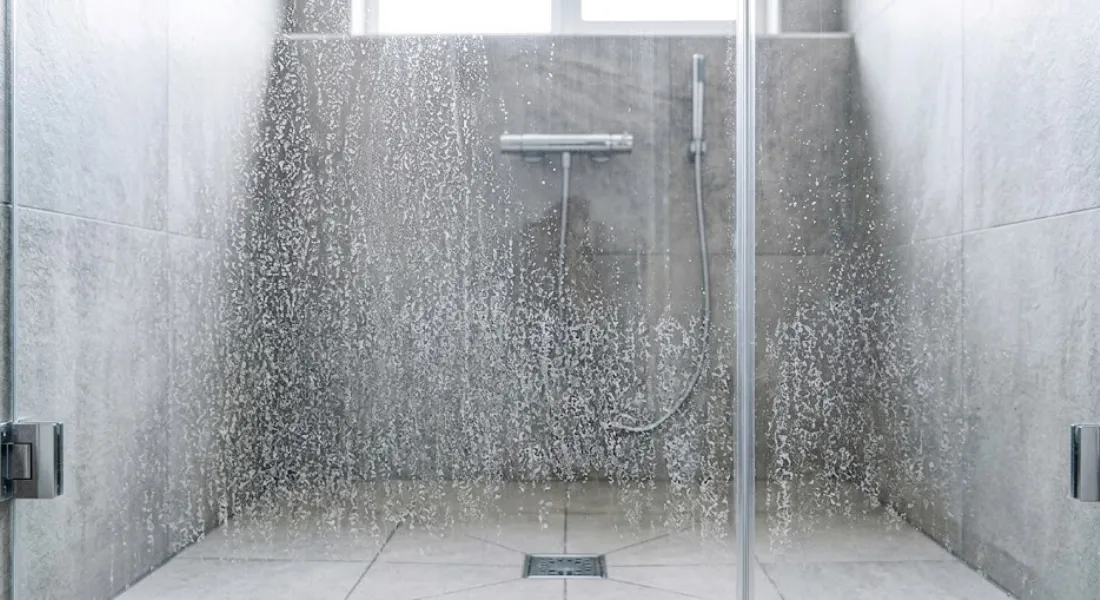
Those cloudy, chalky patches on a shower door are not dirt. They are mineral deposits left behind when water dries on the glass, and ordinary household cleaners often fail to shift them because they were never designed to dissolve minerals. This guide covers what causes buildup on shower glass, how to clean it without damaging the glass, the coating or the hardware, and how to keep it from returning.
Quick answer
Hard water stains on shower glass are mineral deposits left after water dries. Start with the care instructions for your specific glass, coating and hardware, then use a compatible non-abrasive cleaner. Avoid aggressive scraping or cleaners that are not approved for the enclosure.
Shower Glass Past the Point of Cleaning?
If the glass stays cloudy after approved cleaning, or the hardware is corroded or out of alignment, Allnite Glass can evaluate the enclosure and walk you through replacement options in Clarksville.
See Shower Doors & MirrorsWhy Hard Water Stains Form on Shower Glass
Hard water stains develop wherever water is left to evaporate on a surface instead of being wiped away. When water sits on shower glass and dries, the calcium and magnesium dissolved in it stay behind. The water leaves; the minerals do not. Over weeks, those deposits build into the white, chalky film that ordinary glass cleaner barely touches.
The higher the mineral content of the water supply, the faster this happens. In harder-water areas, spotting can reappear within days of a thorough clean, and visible buildup can return on shower glass within a couple of weeks.
Understanding the cause explains the fix. Because the problem is mineral deposit rather than grime, a cleaner that cuts grease will not do much. Something mildly acidic is generally needed to dissolve the deposit — but on a shower enclosure, “mildly acidic” has to be weighed against what the glass, the coating and the hardware can tolerate.
Start With the Care Instructions for Your Enclosure
This step gets skipped, and it is the one that prevents expensive mistakes.
Shower enclosures are not all the same surface. An untreated tempered glass panel, a factory-coated panel, an aftermarket water-repellent treatment, an anodized or plated frame and the seals around the door can each have different cleaning requirements. A product that is harmless on bare glass may etch a coating, dull a finish or degrade a seal.
So before reaching for anything:
- Check the documentation supplied with the shower door, the glass or the coating.
- Note whether the glass is coated. Coating manufacturers usually publish a list of approved cleaners and a list of products that void the warranty.
- Note what the frame, hinges and handles are made of and finished with.
- Test any new cleaner on a small, inconspicuous area first and check the result before treating the whole panel.
If the enclosure came with no paperwork and you cannot identify the coating, treat it as coated and stay with the gentlest approach.
Mild Cleaning Methods for Light Buildup
For light spotting and recent deposits, the gentle end of the range usually works:
- A soft microfiber cloth and a mild, non-abrasive cleaner approved for your enclosure. Wipe, rinse and dry rather than letting the cleaner sit.
- A dedicated shower-glass cleaner. Products sold specifically for shower enclosures are formulated with coatings and hardware in mind, which general-purpose descalers are not.
- A rubber-edged squeegee and warm water, used promptly. On light residue, mechanical removal of the water often beats chemistry.
Work in sections rather than treating the whole panel at once, so nothing dries on the glass before you rinse it. Rinse thoroughly and dry the surface afterwards — leaving cleaner or rinse water to evaporate on the glass simply starts the next deposit.
A Note on Vinegar, Baking Soda and CLR
These three come up in nearly every cleaning article, usually described as safe for glass. That is too broad a claim for a shower enclosure.
- Vinegar is mildly acidic and can dissolve mineral deposits on bare glass. It is not universally safe. Acidic cleaners are not approved for many glass coatings, can dull some metal finishes and can degrade some seals and gaskets with repeated or prolonged contact.
- Baking soda is a mild abrasive. On bare glass, applied with a soft cloth and light pressure, it is usually tolerated. On a coated panel, abrasion is exactly what you are trying to avoid, because a scratched or abraded coating cannot be restored — the coating has to be reapplied or the glass replaced.
- CLR and similar commercial descalers are stronger acids formulated for calcium, lime and rust. They work quickly on heavy deposits, and the manufacturers themselves list surfaces the product must not touch. Prolonged contact past the stated dwell time can damage finishes.
None of these should be used on a coated enclosure unless the coating manufacturer approves them. If you use an approved acidic product on bare glass, follow the label’s dwell time exactly, keep it off the frame and hardware, rinse thoroughly and dry the surface. Never mix cleaning products.
Working on Stubborn Mineral Buildup
Deposits that have been accumulating for months do not always come off in one pass, and the temptation is to escalate to something harsher or to start scraping. Both are how a cosmetic problem becomes permanent damage.
A more measured approach:
- Repeat the mild method. Several gentle passes, each followed by a rinse, often outperform one aggressive attempt.
- Extend contact time within the label’s limits. For an approved cleaner on bare glass, keeping it in contact with the deposit — rather than letting it run straight down the panel — makes it more effective without making it stronger. Do not exceed the dwell time on the label.
- Escalate only to a manufacturer-approved product. If the mild route stalls, the next step is whatever the glass or coating manufacturer approves for heavy deposits, not whatever is strongest under the sink.
- Stop if the glass is not responding. Deposits left long enough can etch into the glass surface. Etching is physical damage to the glass, not a film sitting on top of it, and no cleaner will remove it.
What to avoid regardless of how stubborn the buildup is:
- Abrasive powders and scouring creams
- Steel wool and abrasive pads
- Stiff brushes that can scratch glass or finishes
- Razor blades, scrapers and other sharp tools
- Highly acidic or highly alkaline cleaners not approved for the enclosure
- Leaving any cleaner on glass, hardware or coatings longer than directed
- Mixing cleaning products
Protecting Coatings, Frames and Hardware
The glass usually survives a bad cleaning decision. The surrounding parts often do not.
- Coatings. Water-repellent treatments make deposits easier to release, but they are not permanent and they are not immune to cleaners. Use only what the coating manufacturer approves, and expect the treatment to need renewal over time.
- Frames and hardware. Keep acidic cleaners off anodized, plated and painted finishes unless the hardware manufacturer approves them. Wipe up any overspray promptly.
- Seals and sweeps. Rubber and vinyl components can swell, harden or discolour with repeated exposure to strong cleaners. They also trap moisture, so dry along them.
- Coated glass that has already been damaged. Once a coating is scratched, worn through or chemically etched, cleaning will not bring it back. That is a replacement or reapplication conversation.
Preventing Hard Water Stains on Shower Glass
Prevention is far less work than removal, and it is mostly one habit.
- Squeegee the glass after every shower. This is the single most effective thing you can do. Removing the water removes the minerals before they can be deposited.
- Follow with a quick microfiber wipe on the panels and along the bottom edge and frame, where water pools.
- Ventilate the bathroom so the enclosure dries rather than staying damp.
- Clean lightly and regularly with an approved cleaner rather than waiting for buildup that needs an aggressive session.
- Consider a compatible water-repellent treatment. A treatment approved for your glass causes water to bead and run off instead of sheeting and drying in place, which slows buildup considerably. These treatments need periodic reapplication and are not a substitute for drying the glass.
If you are deciding between clear and patterned shower glass, or want the short version of the routine, see our guide to maintaining clear shower glass.
When Shower Glass Needs Professional Evaluation
Cleaning solves a deposit problem. It does not solve a condition problem. Contact a glass professional when you see:
- Cloudiness or surface damage that does not respond to approved cleaning — often etching rather than residue
- Chips or cracks in a tempered glass panel
- Loose, corroded or failing hinges, handles or brackets
- A door that drags, binds or no longer aligns
- Leaks from failing seals or from how the enclosure was installed
- A coating that has worn through or been damaged
An installed tempered glass panel should not be drilled, cut, ground or otherwise modified in place. Tempered glass is fabricated to its finished dimensions before it is tempered, and working on it afterwards can cause the panel to break.
Frequently Asked Questions
1. What is the fastest way to remove hard water stains from glass shower doors? Start with the cleaner approved for your specific glass, coating and hardware, applied with a soft cloth and given the label’s full dwell time. Several gentle passes usually beat one aggressive attempt, and the aggressive attempt is what risks damaging the enclosure.
2. Can hard water stains permanently damage shower glass? Yes. Deposits left untreated for long periods can etch into the glass surface, leaving it permanently cloudy or rough. Once glass is etched, cleaning will not restore it. Regular drying and light cleaning prevent it.
3. Is vinegar safe on shower glass? On bare, untreated glass it is often tolerated, but it is not safe everywhere. Acidic cleaners are not approved for many glass coatings, and they can dull metal finishes and degrade seals. Check what the manufacturer of your glass, coating and hardware approves before using it.
4. Will baking soda scratch shower glass? Baking soda is a mild abrasive and is usually tolerated on bare glass when applied with a soft cloth and gentle pressure. It should not be used on coated glass or on finished hardware, where abrasion can cause damage that cannot be undone.
5. Do water-repellent coatings eliminate cleaning? No. A compatible coating makes deposits easier to release, but treated glass still needs regular drying and cleaning, and only with products the coating manufacturer approves. Coatings also wear and need periodic renewal.
Key Takeaways
- Hard water stains on shower glass are calcium and magnesium deposits left when water evaporates on the surface — not dirt, which is why ordinary cleaners struggle with them.
- The care instructions for your specific glass, coating and hardware come first. Enclosures differ, and the wrong product can cause damage that cleaning never could.
- Start mild: a soft microfiber cloth, a non-abrasive cleaner approved for the enclosure, then rinse and dry.
- Vinegar, baking soda and CLR are not universally safe on shower enclosures. Acids can affect coatings, finishes and seals; abrasives can damage coated glass.
- For stubborn buildup, repeat gentle passes and escalate only to manufacturer-approved products — never to scraping, steel wool or sharp tools.
- Cloudiness that does not respond to approved cleaning is often etching, which is damage to the glass itself and cannot be cleaned away.
- Squeegeeing the glass after every shower is the single most effective prevention step.
- Chips, cracks, corroded hardware, misaligned doors and persistent leaks warrant professional evaluation rather than another cleaning attempt.
Expert glaziers sharing glass tips and industry insights.
Ready to Discuss Your Glass Project?
Tell Allnite Glass what you need, where the project is located, and whether the glass can be brought to the Clarksville shop. The team will confirm scope, availability and next steps.
Monday – Friday: 7:00 AM – 5:00 PM · Saturday – Sunday: Closed