Is Tempered Glass Strong? What You Need to Know
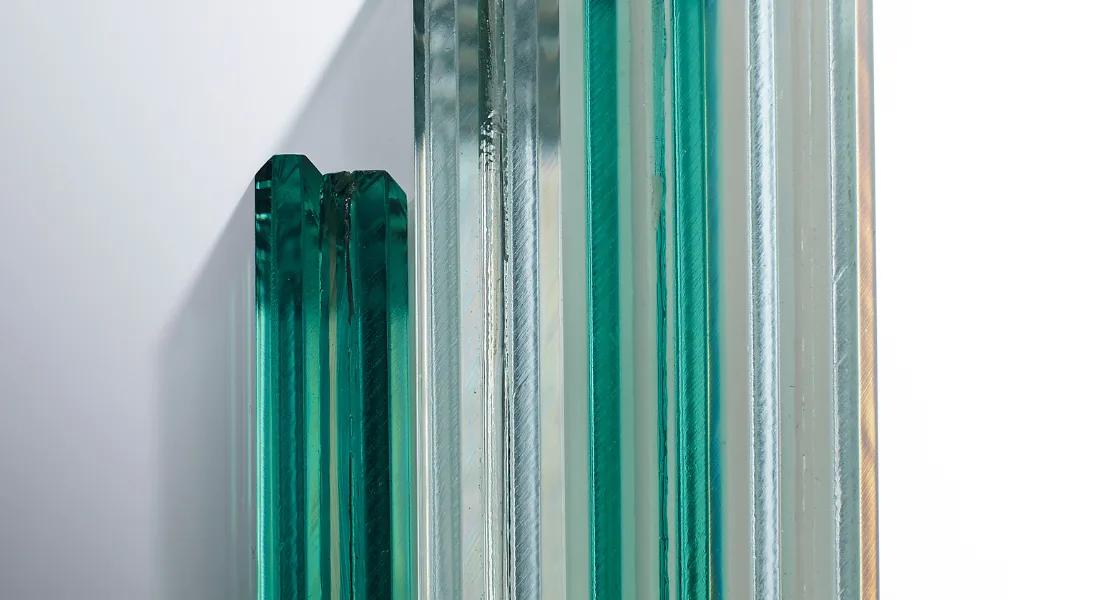
Tempered glass is often described as “safety glass” and is required by building code in dozens of applications — but what makes it stronger, how much stronger is it really, and what are its limitations? Here’s the complete picture.
How Tempered Glass Is Made
Tempered glass starts as ordinary annealed (float) glass. It undergoes a thermal or chemical treatment that creates internal stresses:
Thermal tempering (most common): The glass is heated in a furnace to approximately 620°C (1150°F), then rapidly cooled with high-pressure air jets. The exterior surfaces cool and solidify first, while the interior remains fluid briefly. As the interior eventually cools, it contracts — putting the surfaces into compression and the core into tension.
This internal stress profile is what gives tempered glass its strength and its distinctive breakage pattern.
How Much Stronger Is Tempered Glass?
Tempered glass is typically 4 to 5 times stronger than annealed glass of the same thickness when measured for bending (flexural) strength.
Practically speaking:
- Annealed 1/4” glass: Withstands roughly 6,000 psi before breaking
- Tempered 1/4” glass: Withstands roughly 24,000 psi before breaking
This is why tempered glass is specified for shower doors, glass railings, patio furniture, and any application where the glass might be struck, loaded, or used in a hazardous location.
The Breakage Difference
This is the defining characteristic of tempered glass from a safety standpoint. When annealed glass breaks, it shatters into large, sharp, jagged shards — classic “broken glass” that causes serious cuts.
Tempered glass stores significant energy in its internal stress state. When it does break (which takes substantially more force), it releases that energy explosively, shattering into thousands of small, relatively blunt cubes. These cubes can still cause injury, but lacerations are far less severe than from annealed glass shards.
Tempered Glass’s Critical Vulnerability
Here’s what surprises many people: despite being far stronger than regular glass, tempered glass is vulnerable to point impacts at its edges and corners.
The edge of a tempered glass pane has a small area of exposed tension stress. A sharp impact at the corner — a metal tool, a ring, a sharp stone — can crack through this tension zone and cause the entire pane to spontaneously shatter.
This is called nickel sulfide inclusion fracture or edge-impact fracture, and it’s why:
- Tempered glass must have polished, chamfered edges when handling
- Tempered glass should not be chipped or have edge damage
- Installing tempered glass requires care not to strike the edges
- In very rare cases, spontaneous breakage can occur from manufacturing defects (nickel sulfide inclusions)
What Tempered Glass Cannot Do
It cannot be cut after tempering. Attempting to cut, drill, or grind tempered glass will cause it to shatter instantly. All cutting, edge work, and hole drilling must be done on the raw annealed glass before tempering.
This means if you need a custom-sized tempered glass panel, it must be ordered to the exact final dimensions. You cannot trim it on-site.
When Is Tempered Glass Required?
Building codes (IBC and IRC) require tempered (or laminated) safety glazing in:
- Shower and tub enclosures
- Doors (entry, patio, sliding, bifold)
- Sidelights within 24” of a door
- Glass within 18” of floor level
- Glass railings and balustrades
- Pools and hot tubs
- Stairway enclosures
Getting Custom Tempered Glass
Because tempered glass must be fabricated to final dimensions before tempering, working with a local glass shop is the practical approach. At Allnite Glass in Clarksville, we fabricate custom tempered glass panels for railings, shower enclosures, table tops, and more. Bring your measurements or the item to be fitted and we’ll handle the rest.
Call (931) 645-2464 or visit 1525 Ashland City Rd, Clarksville, TN.

Allnite Glass Team
Expert glaziers sharing glass tips and industry insights.
Ready to Get Started?
Contact us today for a free quote on commercial glazing, custom-cut glass, window repair, and more. Most repairs completed within 24–48 hours.
Monday – Friday: 7:00 AM – 5:00 PM · Saturday – Sunday: Closed