Low-E Glass vs. Double Glazing: Which Is Better?
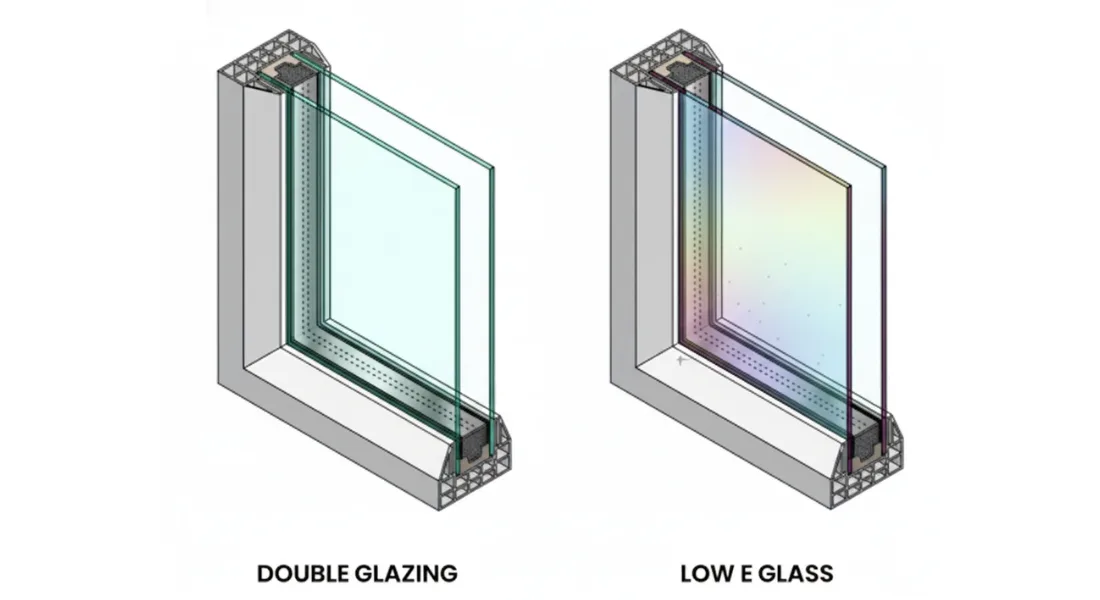
If you’re researching energy-efficient window upgrades, you’ve almost certainly run into two terms: Low-E glass and double glazing. These aren’t competing products — they often work together — but understanding what each one does will help you make a smarter decision for your home and budget.
What Is Double Glazing?
Double glazing (also called a double-pane or insulated glass unit / IGU) refers to a window assembly with two panes of glass separated by a sealed air or gas-filled spacer. The space between the panes acts as a thermal barrier, dramatically reducing heat transfer compared to single-pane windows.
Benefits of double glazing:
- Reduces heat loss in winter
- Keeps heat out in summer
- Reduces condensation on interior glass
- Improves sound insulation
- Significantly reduces energy bills
The sealed space is typically filled with argon or krypton gas, both of which are denser than air and provide additional insulating value.
What Is Low-E Glass?
Low-E stands for low emissivity. It refers to a microscopically thin metallic coating applied to one surface of a glass pane. This coating reflects radiant heat — either keeping it inside during winter or blocking it from entering during summer — while still allowing visible light to pass through.
There are two main types:
- Hard coat (pyrolytic) Low-E: Applied during manufacturing while the glass is hot. More durable but slightly less efficient.
- Soft coat (sputtered) Low-E: Applied after manufacturing in a vacuum chamber. More energy efficient but must be installed in a sealed IGU to protect the coating.
How They Work Together
Here’s the key insight: Low-E glass and double glazing are not the same thing, and they’re not either/or choices. Most modern high-performance windows use both simultaneously.
A typical energy-efficient window is a double-pane IGU where one or both of the inner surfaces has a Low-E coating. This combination gives you:
- Insulation from the sealed air/gas gap (double glazing)
- Radiant heat control from the Low-E coating
Which Is Better for Middle Tennessee?
Tennessee’s climate sits in a mixed heating/cooling zone. Summers are hot and humid; winters are mild but can dip well below freezing. This means you need a window that works in both directions.
For Middle Tennessee homes, the best choice is a double-pane IGU with a soft-coat Low-E coating oriented to block solar heat gain in summer while retaining interior heat in winter. Look for windows with a low Solar Heat Gain Coefficient (SHGC) — around 0.25 to 0.30 — combined with a low U-factor of 0.30 or less.
When to Consider an Upgrade
If your windows are:
- Single-pane (no IGU at all)
- Double-pane but with a failed seal (foggy between panes)
- More than 20–25 years old without Low-E coating
…then upgrading to a double-pane Low-E unit is likely worth the investment in energy savings alone, not counting comfort improvements.
Can You Repair a Failed IGU Instead of Replacing It?
Yes — and this is where many homeowners save significant money. If your double-pane window has a failed seal (fogging, condensation between the panes), the frame itself is often still perfectly good. The solution is to replace the insulated glass unit only, not the entire window.
At Allnite Glass in Clarksville, we specialize in sash and IGU replacement. We can fit a new double-pane Low-E unit into your existing frame at a fraction of the cost of a full window replacement. Stop by our shop at 1525 Ashland City Rd or give us a call at (931) 645-2464.

Allnite Glass Team
Expert glaziers sharing glass tips and industry insights.
Ready to Get Started?
Contact us today for a free quote on commercial glazing, custom-cut glass, window repair, and more. Most repairs completed within 24–48 hours.
Monday – Friday: 7:00 AM – 5:00 PM · Saturday – Sunday: Closed