Safety Glass vs. Tempered Glass: How to Choose
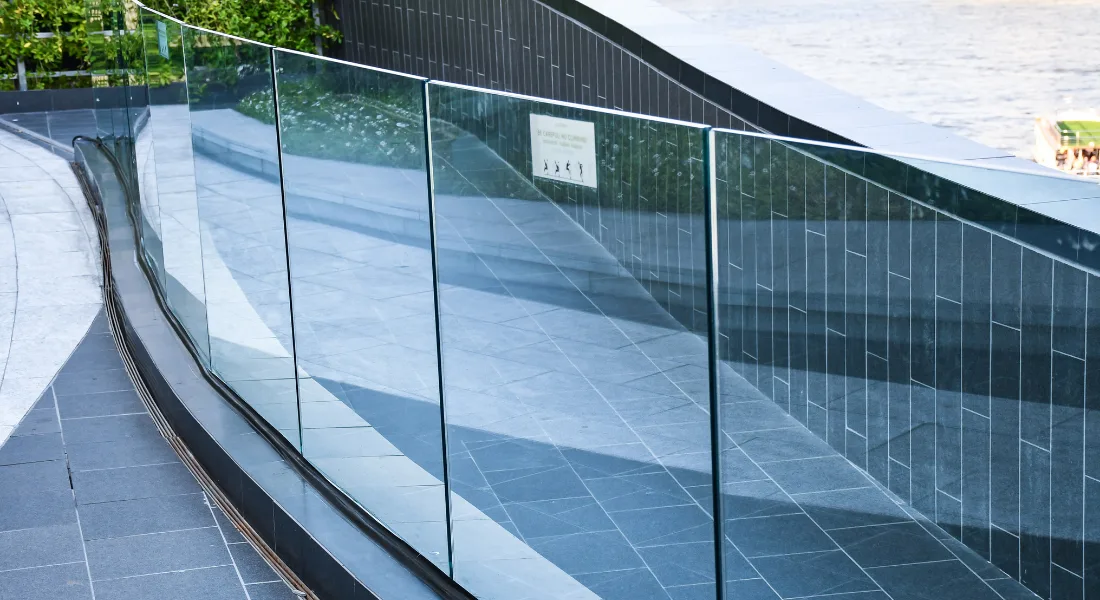
“Safety glass” and “tempered glass” are often used interchangeably in conversation — but they’re not the same thing. Tempered glass is one type of safety glass, but there are others. Understanding the distinctions will help you choose the right product for your project and ensure code compliance.
What Is Safety Glass?
Safety glass is a category of glass products that meet specific performance standards for use in hazardous locations — places where a person could fall into or through the glass, or where glass breakage could cause serious injury.
The defining characteristic of safety glazing isn’t about strength (preventing breakage) — it’s about breakage behavior (what happens when it does break).
The two main types are:
- Tempered glass
- Laminated glass
Both are recognized as safety glazing under ANSI Z97.1 and CPSC 16 CFR 1201. A third type, wired glass, was historically used but is now largely phased out in favor of tempered or ceramic glass.
Tempered Glass: Safety Through Breakage Pattern
Tempered glass is heat-treated to create internal compressive stress. This makes it:
- 4–5x stronger than annealed glass
- When broken, it shatters into small, relatively blunt cubes (not large, sharp shards)
Best applications:
- Shower enclosures
- Entry door sidelights and transoms
- Glass railings and balustrades
- Patio and sliding doors
- Any application within 18” of floor level
- Glass stair railings
Limitations:
- Cannot be cut after tempering — must be ordered to final dimensions
- When it does break, it shatters completely and instantly (the “explosive” failure mode)
- Edge vulnerability to point impacts
- Cannot be used in overhead glazing without additional retention system (if it shatters, all the pieces fall)
Laminated Glass: Safety Through Retention
Laminated glass consists of two or more glass plies bonded together with a PVB (polyvinyl butyral) or ionoplast interlayer. When broken, the pieces remain adhered to the interlayer.
Best applications:
- Skylights and overhead glazing (retained glass = no falling shards)
- Hurricane impact zones
- High-security glazing
- Glass floors and walkways
- Acoustic privacy (the interlayer reduces sound transmission)
- Windshields (all automobile windshields are laminated)
Advantages over tempered:
- Can be cut to size after fabrication (special tooling required)
- If broken, pieces stay in place — doesn’t require immediate emergency boarding
- Better for overhead applications where falling glass is the primary hazard
- Provides intruder resistance (laminated glass is much harder to penetrate than tempered)
Category I vs. Category II: What the Code Actually Requires
Under CPSC standards, safety glazing is divided into two performance categories:
Category I: Withstands a 150-ft-lb impact test. Sufficient for most hazardous locations in residential construction.
Category II: Withstands a 400-ft-lb impact test. Required for large panels (greater than 9 sq ft) in high-risk locations, entry doors, and sliding doors.
Most tempered glass products qualify as Category II. Many laminated configurations meet either category depending on the glass thickness and interlayer.
Which Should You Choose?
| Situation | Recommended Type |
|---|---|
| Shower enclosure | Tempered |
| Glass railing | Tempered |
| Entry door sidelight | Tempered (Category II) |
| Skylight or overhead | Laminated |
| High-security window | Laminated (thicker interlayer) |
| Hurricane zone | Laminated impact-rated |
| Glass floor or walk-on | Laminated |
| Acoustic partition | Laminated |
Code Compliance Verification
Any safety glass installed in a building must carry a permanent safety glazing label (typically etched into a corner) showing the manufacturer, standard met, and glazing category. Inspectors look for this label.
At Allnite Glass in Clarksville, all our safety glass fabrication is certified and labeled appropriately. We can advise on the right type for your specific application and ensure it meets Tennessee building code requirements. Call (931) 645-2464 or visit 1525 Ashland City Rd, Clarksville, TN.
Allnite Glass Team
Expert glaziers sharing glass tips and industry insights.
Ready to Get Started?
Contact us today for a free quote on commercial glazing, custom-cut glass, window repair, and more. Most repairs completed within 24–48 hours.
Monday – Friday: 7:00 AM – 5:00 PM · Saturday – Sunday: Closed