What Is a Double-Pane Window and How Does It Work?
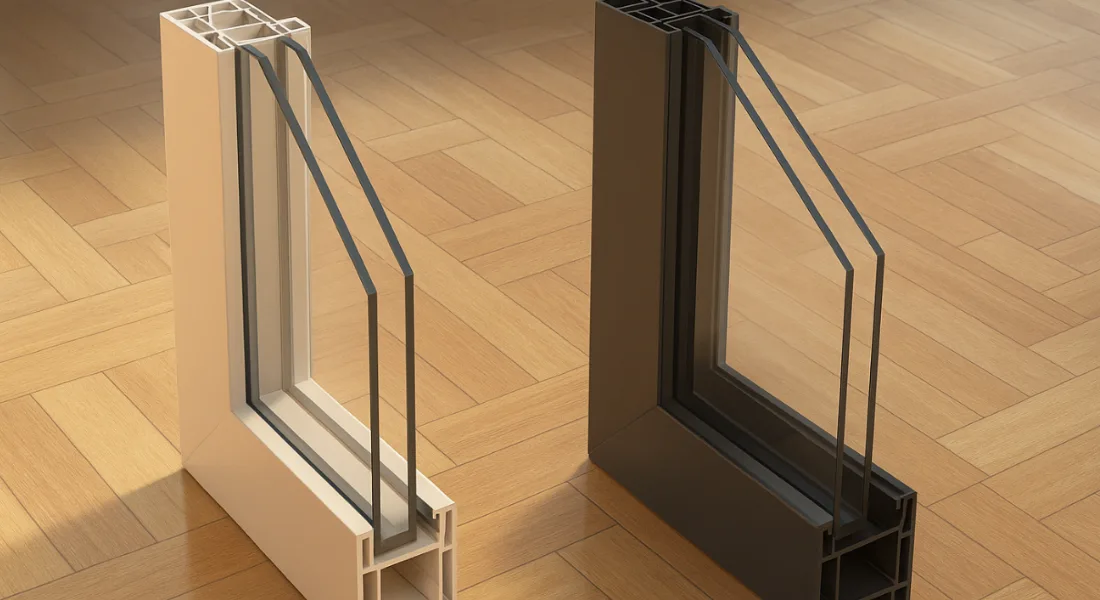
A double-pane window contains two panes of glass separated by a spacer and sealed together as an insulated glass unit, or IGU. Double-pane, dual-pane and double-glazed are commonly used for this two-pane construction. The space between the panes may contain dry air or an insulating gas, while Low-E coatings and warm-edge spacers can further affect performance.
The glass unit is only one part of the window. Its actual energy, condensation and sound performance also depends on the sash, frame, weatherstripping, product ratings and installation.
Double-Pane Window at a Glance
- Panes
- Two
- Other names
- Dual-pane or double-glazed
- Assembly
- Insulated glass unit
- Between the panes
- Dry air or a specified insulating gas
- Optional features
- Low-E coating, warm-edge spacer, tint or grids
- Common failure sign
- Fog or condensation between the panes
- Typical glass solution
- Replace the complete failed IGU when the frame and sash remain serviceable
Do Double-Pane, Dual-Pane and Double-Glazed Mean the Same Thing?
In everyday use, yes. All three describe a sealed unit built from two panes of glass. The differences are regional and habitual rather than technical, which is why searching for one term and reading about another can be confusing.
| Term | What it usually refers to | Notes |
|---|---|---|
| Double-pane | A sealed unit made from two panes of glass | The most common phrasing in the United States |
| Dual-pane | The same two-pane construction | Used interchangeably with double-pane, more often on the West Coast and in product listings |
| Double-glazed | The same two-pane construction | More common in the United Kingdom, Australia and technical writing |
| Insulated glass unit (IGU) | The sealed glass assembly itself, whatever the pane count | An IGU can hold two panes or more; only a two-pane IGU is a double-pane unit |
The distinction worth remembering is the last one. “Insulated glass unit” describes the sealed assembly, not the number of panes. “Double-pane” specifically means two panes, so a triple-pane window is also an IGU but is not a double-pane window.
What Is Inside a Double-Pane Window?
A double-pane insulated glass unit is an assembly, not a single component. Working from the outside in, it typically contains:
- Two glass panes
- A spacer system holding the panes a set distance apart
- Desiccant, where the spacer system uses it, to absorb trace moisture inside the cavity
- A sealed cavity between the panes
- Dry air or a specified insulating gas filling that cavity
- A perimeter seal closing the assembly at the edges
- An optional Low-E coating on one of the internal glass surfaces
The space between double-pane windows is a sealed cavity that may contain dry air or an insulating gas such as argon. The exact construction varies by product and manufacturer, so the fill, the spacer material and the seal build-up on one unit will not necessarily match another.
How Do Double-Pane Windows Insulate?
The sealed space between the panes reduces heat transfer compared with a single sheet of glass. Beyond that basic point, several things are happening at once.
Glass, the spacer, the frame and the cavity each conduct heat differently, so the assembly’s performance is not decided by the glass alone. The width of the cavity and the gas specified for it affect how much heat moves across the gap by convection and conduction. A Low-E coating works on a different mechanism again — it helps control radiant heat transfer, reflecting infrared energy rather than slowing conduction.
The practical consequence is that pane count is a weak predictor on its own. Whole-window performance — the rated assembly, including frame and sash — matters more than counting panes, which is why the rating labels covered further down are the useful comparison tool.
Parts of a Double-Pane Insulated Glass Unit
Glass panes
Two panes, which may differ from one another in thickness, tint, coating or heat treatment depending on what the opening requires. Safety glazing requirements apply in some locations and are decided by the application, not by the pane count.
Spacer and desiccant
The spacer holds the two panes a set distance apart around the perimeter. Spacer materials vary, and warm-edge designs are intended to reduce heat flow at the edge of the glass compared with a conventional metal spacer. Many spacer systems carry desiccant to absorb trace moisture sealed inside the unit during manufacture.
Insulating space
The cavity between the panes. Its width and contents are specified by the manufacturer for that product. Dry air and insulating gases such as argon are both used.
Perimeter seals
The seal closes the cavity and holds the assembly together at the edge. Seal materials and configurations differ between manufacturers and product lines, and no single arrangement is universal. What they share is a job: keeping the sealed cavity sealed. When that fails, the unit fogs.
Low-E coating
An optional microscopically thin coating applied to one of the internal glass surfaces to control radiant heat transfer. Not every double-pane unit has one, and coatings differ in what they are tuned to do.
Sash and frame
The glass unit sits inside a sash and frame. Air leakage, water management, hardware operation and much of the installed performance belong to these parts rather than to the glass. A sealed unit in a damaged or poorly fitted frame will not perform as its rating suggests.
Double-Pane vs. Single-Pane Windows
| Consideration | Single-pane | Double-pane |
|---|---|---|
| Construction | One sheet of glass | Two panes sealed to a spacer as an insulated glass unit |
| Sealed cavity | None | Sealed cavity containing dry air or a specified gas |
| Heat transfer through the glazing | Higher, with no insulating cavity | Reduced by the sealed cavity, by an amount that depends on the product |
| Low-E compatibility | Coatings are exposed on a surface that is cleaned and handled | Coating can sit on a protected internal surface |
| Interior surface condensation | More likely in cold weather | Generally better resistance, depending on the complete window |
| Typical failure to expect | Cracking or breakage of the single sheet | Perimeter seal failure, showing as fog between the panes |
| Glass-only service | Replace the single pane | Replace the complete sealed unit |
How much difference a double-pane unit makes depends on the specific products being compared, including the frame, the coating and the ratings. Comparing rated whole-window numbers is more reliable than comparing pane counts.
Benefits and Limitations of Double-Pane Windows
Potential benefits:
- Reduced heat transfer compared with a single pane
- Improved interior comfort near the window
- Better resistance to condensation on the interior glass surface
- A possible reduction in outside noise
- Compatibility with Low-E coatings on a protected internal surface
- Replacement IGUs may be available where the existing frame and sash are serviceable
Limitations worth knowing before you buy:
- The perimeter seal can fail, and that is the most common way these units reach end of life
- Two panes on their own do not guarantee high performance; the rated assembly does the work
- Air leakage can still occur around the sash, the frame or the installation
- Sound reduction varies considerably by product and by the frequencies involved
- A damaged sealed unit normally has to be replaced as a complete assembly rather than repaired
- Not every existing frame can accept every IGU specification
What Do Window Performance Ratings Mean?
Rated numbers describe the complete window, which is exactly why they are more useful than a pane count. The National Fenestration Rating Council label carries the following.
- U-factor — heat transfer through the complete window. Lower is better.
- Solar Heat Gain Coefficient (SHGC) — the portion of solar heat admitted through the window.
- Visible Transmittance (VT) — the amount of visible light admitted.
- Air Leakage — air passing through the complete assembly.
- Condensation Resistance — the product’s resistance to interior surface condensation under standardized test conditions.
When comparing products, use the NFRC whole-product ratings rather than a figure quoted for the glass alone. ENERGY STAR certification and local building-code requirements are separate things, and the numbers that apply to a given project depend on climate zone, the project itself and the jurisdiction reviewing it. Confirm the requirement for your address before treating any single target number as the rule.
How Can You Tell If a Window Is Double-Pane?
There are a few non-invasive checks:
- Look at the edge of the glass for a visible spacer running around the perimeter.
- Hold a small light near the glass at an angle and count the reflections. Two separate glass surfaces produce more reflections than one.
- Check for a manufacturer or NFRC label, often on the spacer, the edge of the glass or the sash.
- Look through property documents, product paperwork or a previous invoice for the original specification.
- Ask a glass professional when the configuration is still uncertain.
Do not dismantle the glazing system to find out. Removing stops, beads or glazing seals to inspect the glass risks damaging both the unit and the sash.
Why Do Double-Pane Windows Become Foggy?
Fog, haze or moisture between the panes commonly indicates that the insulated glass unit’s perimeter seal has failed. The moisture is inside the sealed assembly and cannot be removed by cleaning either exposed glass surface.
If that is what you are seeing, our guide to why a window pane fogs and what can be done about it covers the diagnosis and the options in detail.
Does a Failed Double-Pane Unit Require a Whole New Window?
Not necessarily. If the problem is limited to the sealed insulated glass unit and the sash and frame remain serviceable, replacing the IGU may be possible without replacing the complete window. Damage involving the sash, frame, hardware, drainage or the surrounding opening may require additional work.
Which route applies is a question about the condition of the whole window, not just the glass. Our pages on double-pane window repair and IGU replacement and on glass replacement versus full window replacement walk through how that decision is usually made. For problems that extend past the sealed unit itself, residential window glass repair covers the broader scope. If you are weighing a specification change rather than a repair, the double-pane and triple-pane window differences are worth reading before deciding.
Questions to Ask Before Replacing an IGU
Working through these before you request a quote will make the conversation faster and the answer more accurate:
- Is the moisture between the panes, or is it on a room-facing surface?
- Is either pane cracked?
- Does the window open, close and lock correctly?
- Is the sash warped or damaged?
- Is the frame rotted or affected by water intrusion?
- Is safety glass required for this location?
- Does the existing unit use Low-E, tint, grids or another special feature?
- Are manufacturer or NFRC labels available on the unit or the sash?
Photos of the glass, the edge of the sash and any visible label help more than measurements alone. If you would like to discuss your double-pane glass with someone who can look at the pictures, send them over with a short description of the problem.
Sources reviewed
- National Fenestration Rating Council — Energy Performance Label
- U.S. Department of Energy — Purchasing Energy-Efficient Residential Windows, Doors and Skylights
- ENERGY STAR — Residential Windows, Doors and Skylights Climate Zone Finder
- ENERGY STAR — Residential Windows, Doors and Skylights Key Product Criteria

Practical glass information from the Allnite Glass team in Clarksville, Tennessee.
Questions About Your Double-Pane Glass?
If your double-pane glass is foggy, cloudy, cracked or broken, send Allnite Glass photos, approximate measurements and a description of the problem. The team can review the glass-related scope, availability and next steps.
Monday – Friday: 7:00 AM – 5:00 PM · Saturday – Sunday: Closed