When Is Tempered Glass Required In Residential Windows
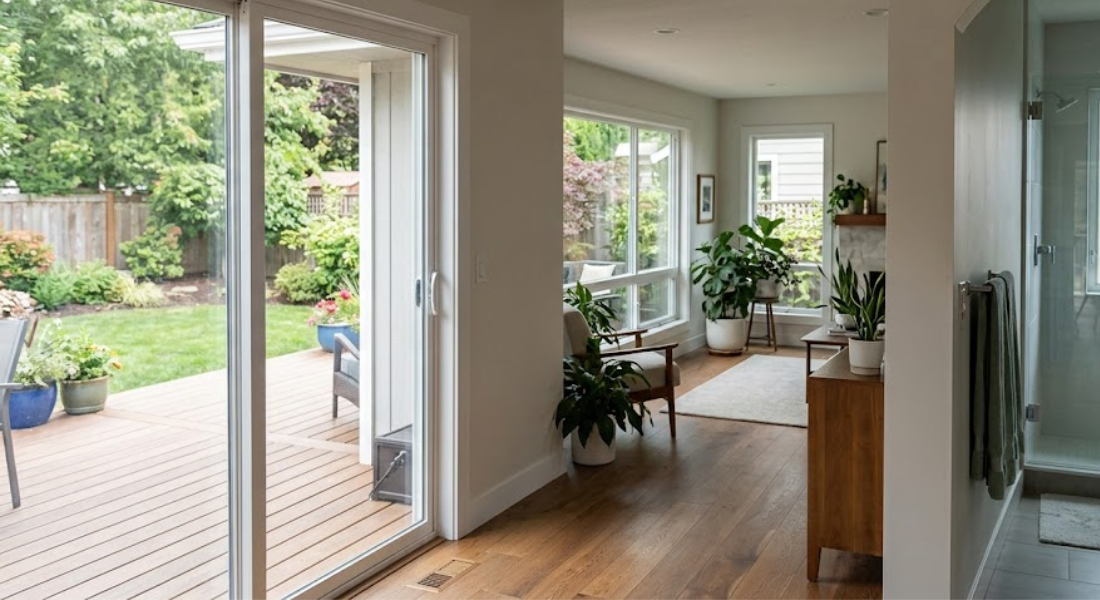
If you’ve ever wondered why some windows in your home look ordinary while others near your shower or stairway seem thicker or feel different when tapped, the answer usually comes down to tempered glass. Building codes require tempered glass windows in specific “hazardous locations” throughout a home — areas where broken glass is more likely and where the consequences of falling glass are more severe. The bathroom is one of the most common places tempered glass is required, but it’s far from the only one.
This article is worth reading because window safety rules are easy to get wrong, whether you’re planning a bathroom remodel, installing replacement windows, or just trying to understand why your builder specified a certain glass type. We’ll walk through exactly where tempered glass is required, what the International Residential Code and International Building Code say about hazardous locations, and how tempered glass compares to other glazing options like annealed and laminated glass.
What Is Tempered Glass and Why Does the Building Code Require It?
Tempered glass is a type of safety glazing that’s been treated with extreme heat and then rapidly cooled, a process that makes tempered glass stronger than standard glass and changes how it breaks. Instead of shattering into long, sharp shards, tempered glass breaks into small, relatively harmless pebble-like pieces. This is the entire reason building codes single it out: in locations where people are likely to walk into, fall against, or otherwise contact glass, the risk of serious injury from broken glass is much lower with tempered glass than with ordinary annealed glass.
Because of this safety advantage, the building code doesn’t leave the choice of glass type up to guesswork. Specific sections of the International Residential Code and International Building Code list exact hazardous locations where safety glazing — meaning tempered glass, laminated glass, or another approved impact-resistant glazing — is mandatory. Homeowners, contractors, and inspectors all rely on these sections to determine when a window must use tempered glass rather than standard glass.
Is Tempered Glass Required in the Bathroom?
Yes, tempered glass is required in many bathroom locations, and the bathroom is one of the clearest examples of a hazardous location under residential building codes. Glazing in doors and enclosures for hot tubs, whirlpools, saunas, and steam rooms must be tempered when the bottom exposed edge of the glazing is less than 60 inches above the standing or walking surface. This includes shower doors and glass panels that form part of the wall enclosing these wet areas.
The logic here is straightforward: bathrooms combine wet, slippery surfaces with glass positioned close to where a person could fall. A slip near a glass shower door or a hot tub enclosure is a realistic scenario, so codes require tempered glass in these spots rather than standard glass. It’s worth noting that this requirement isn’t limited to the enclosure itself — glazing anywhere in a bathroom wall within that 60-inch zone around a tub, whirlpool, or shower can also be considered a hazardous location requiring tempered glass.
What Counts as a Hazardous Location Under the Building Code?
Beyond bathrooms, building codes define a fairly specific list of hazardous locations where glazing must meet safety requirements. These typically include glass in and around doors, glass adjacent to stairways and landings, glass near walking surfaces at low heights, and large glass panels close to the floor. Each hazardous location has its own measurements and distances, which is why professionals refer directly to the code sections rather than relying on general rules of thumb.
One common thread across these hazardous locations is proximity to a standing or walking surface. Glass positioned within a certain vertical or horizontal distance of a floor, landing, or walkway is treated differently than glass mounted higher up on a wall, since the risk of accidental contact drops significantly with height and distance. Fixed and operable panels are both covered under these rules, meaning it doesn’t matter whether the glass in question opens or is permanently sealed shut.
Do You Need Tempered Glass Near Doors?
Glazing adjacent to a door is one of the most frequently cited hazardous locations. Glass in an individual fixed or operable panel next to a door is generally considered hazardous when the bottom edge of the glass sits less than 60 inches above the floor and the glazing is within 24 inches of either side of the door in the plane of the door in a closed position. In plain terms, if a window sits close enough to a doorway that someone could reasonably fall or stumble into it while opening or closing the door, it likely needs to be tempered.
There are some exceptions. Openings small enough that a 3-inch sphere cannot pass through them are generally exempt, since a small decorative pane doesn’t pose the same risk as a full window. There are also exceptions for glazing that’s separated from the door by an intervening wall or permanent barrier, since that barrier removes the practical hazard the rule is designed to address.
Is Tempered Glass Required Near Stairways?
Stairways introduce their own set of hazardous locations, largely because falls are more likely near stairs and the consequences of falling into glass on a stairway can be severe. Glazing adjacent to stairways, landings, and ramps is considered hazardous when it sits within 36 inches horizontally of a walking surface and the exposed edge of the glass is less than 60 inches above that surface. A separate rule addresses glazing near the bottom tread of a stairway, treating glass within 60 inches of the bottom tread as hazardous when it’s less than 60 inches above the nose of the tread, measured in any direction.
There’s also a specific rule for the landing at the bottom of a stairway. Glazing near that bottom landing is considered hazardous when it’s less than 36 inches above the landing and falls within a 60-inch horizontal arc, measured across less than 180 degrees from the bottom tread nosing. In practical terms, if you’re installing or replacing windows anywhere near a staircase, it’s worth checking these distances carefully before assuming standard glass is acceptable.
What Are the Rules for Glazing Near Hot Tubs, Whirlpools, and Saunas?
We touched on this earlier for bathrooms specifically, but it’s worth expanding on because these wet-area rules extend beyond just showers. Doors and enclosures for hot tubs, whirlpools, saunas, and steam rooms all fall under the same hazardous-location logic, and any glazing in the surrounding wall within 60 inches of the standing or walking surface adjacent to these features is treated the same way.
There is an important exception, though: if the glass is located more than 60 inches horizontally from the edge of the water for these features, it generally isn’t required to be tempered, regardless of its vertical height. This distinction matters for larger bathrooms or spa rooms where a window might be nowhere near the actual tub or shower stall, since distance from the water source — not just distance from the floor — factors into whether tempered glass is required.
Tempered Glass vs. Annealed and Laminated Glass: What’s the Difference?
Not all glass used in construction is the same, and understanding the difference helps explain why codes are so specific. Annealed glass is standard, untreated glass — it’s the default type used in most non-hazardous locations, but it breaks into large, sharp shards that can cause serious injuries, which is exactly why it’s not permitted in hazardous locations.
Tempered glass, by contrast, undergoes a heat-treatment process that makes it several times stronger than annealed glass and causes it to break into small granular pieces rather than jagged shards. Laminated glass is a third option, made by bonding layers of glass with an interlayer that holds the pieces together even when broken, similar to a car windshield. Both tempered glass and laminated glass qualify as safety glazing under most codes, so building professionals can choose either type depending on the application, though tempered glass is by far the more common choice for residential windows and doors.
How Do You Know If a Window Is Tempered?
Tempered glass is required to carry a permanent, identifying label under most residential codes, and this label is designed so it cannot be removed without being destroyed. The label is typically etched, sandblasted, or otherwise permanently applied near a corner or edge of the glass, and it identifies the manufacturer along with the applicable safety standard the pane meets.
If you’re checking existing windows in a home — say, before a renovation or when trying to determine whether a bathroom window meets current requirements — look closely at each corner of the glass for this small etched or stamped mark. For smaller multipaned assemblies, codes sometimes only require one pane in the unit to carry the full label, with other panes labeled more simply, so it’s worth checking every pane rather than assuming they’re all identical.
What Does the Building Code Say About Safety Glazing More Broadly?
Both the International Residential Code, used primarily for one- and two-family dwellings, and the International Building Code, which covers a broader range of structures, include detailed safety glazing sections. While the specific section numbers differ slightly between the IRC and IBC, both codes share the same underlying goal: identifying hazardous locations and requiring impact-resistant glazing wherever the risk of injury from broken glass is elevated.
These code requirements aren’t just bureaucratic formality — they reflect decades of injury data showing that ordinary glass in the wrong location is a genuine safety hazard. Because code language can be dense, many homeowners rely on licensed contractors or building inspectors to confirm exactly which windows in a project need to be tempered, particularly in complex spaces like bathrooms with multiple hazardous zones overlapping near a tub, shower, and door all at once.
Do Replacement Windows Need to Be Tempered?
Yes, and this is a detail many homeowners overlook. When you replace your windows, the new glass must meet current safety glazing requirements even if the original window in that location was never tempered. This commonly comes up during additions, deck or porch construction, or bathroom remodels, where existing windows and doors near the new construction may need to be upgraded to tempered glass to comply with today’s code, even though they were installed under an older set of rules.
This means a straightforward window swap in a hazardous location isn’t just a matter of matching the old size and style — it’s an opportunity, and often a requirement, to bring that opening up to current safety standards. Checking with a local building inspector before finalizing a replacement window order can save significant time and prevent a failed inspection later in the project.
Looking for Tempered Glass Services in Clarksville, TN?
Allnite Glass has been helping homeowners in Clarksville with high-quality tempered glass replacement, window glass repair, shower glass, and custom glass solutions for years. If your renovation requires code-compliant safety glazing or you need to replace damaged tempered glass, our experienced technicians can help you choose the right option and complete the job with precision. Contact Allnite Glass today to schedule your tempered glass service in Clarksville, TN.
Key Takeaways
- Tempered glass breaks into small, relatively safe pieces instead of sharp shards, which is why building codes require it in hazardous locations.
- The bathroom is a common hazardous location — glazing near tubs, showers, whirlpools, and saunas within 60 inches of the walking surface typically must be tempered.
- Glass near doors is considered hazardous within 24 inches of the door when it’s less than 60 inches above the floor.
- Stairways have their own rules: glazing within 36 inches of a walking surface and less than 60 inches high is generally required to be tempered.
- Tempered glass is stronger than annealed glass and, along with laminated glass, qualifies as approved safety glazing.
- Tempered glass always carries a permanent label that cannot be removed without destroying it.
- The International Residential Code and International Building Code both define these hazardous locations, though section numbers vary between them.
- Replacement windows must meet current code, so upgrading to tempered glass is often required even if the original window wasn’t tempered.

Allnite Glass Team
Expert glaziers sharing glass tips and industry insights.
Ready to Get Started?
Contact us today for a free quote on commercial glazing, custom-cut glass, window repair, and more. Most repairs completed within 24–48 hours.
Monday – Friday: 7:00 AM – 5:00 PM · Saturday – Sunday: Closed