Which Types of Glass Can and Cannot Be Cut?
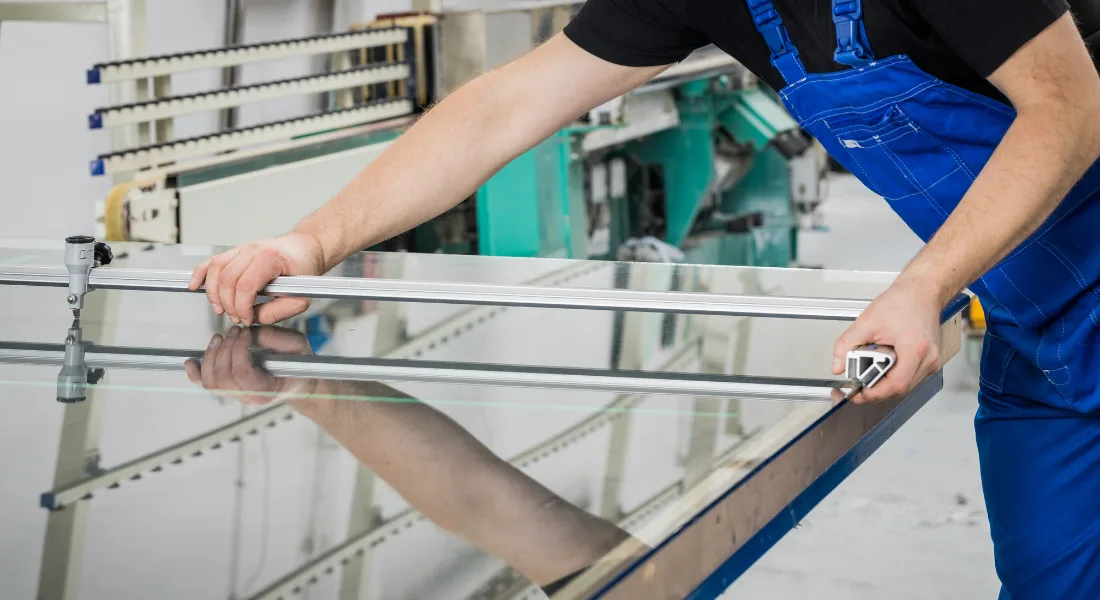
Whether a piece of glass can be cut depends on what kind of glass it is and what stage of fabrication it has already been through. Some products are routinely scored and snapped to size. Others have to be finished before heat treatment or assembly, which means they must be ordered at their final dimensions. Here is how the common architectural glass types compare.
Which types of glass can and cannot be cut?
Annealed glass can usually be cut and edge-finished before installation. Tempered and heat-strengthened glass cannot be cut, drilled, notched or edge-worked after heat treatment. Laminated, coated, wired and glass-ceramic products require product-specific fabrication, while an assembled insulating glass unit cannot simply be trimmed smaller.
Glass Type Comparison
| Glass type | Can it be cut? | When or where it must be fabricated | Important caution |
|---|---|---|---|
| Annealed float glass | Yes — scored and snapped | Cut and edge-finished in the shop or on site | Whether annealed glass suits the finished project depends on the application, dimensions and safety requirements |
| Mirror glass | Usually yes | Cut and edge-finished before installation | The reflective backing can chip or become damaged at the cut edge, so careful handling and edge protection are important |
| Heat-strengthened glass | No | All cutting, drilling and edge work happens before heat treatment | A finished pane cannot be altered after it leaves the furnace |
| Tempered (toughened) glass | No | Cut, drilled, notched and edge-finished before tempering | Altering a tempered pane can release its internal stresses and break it |
| Laminated glass | Specialist fabrication only | Processed by a fabricator with the right equipment and procedures | Not a routine on-site cut; the interlayer and edge quality both matter |
| Coated glass (Low-E, reflective) | Depends on the product and the stage of fabrication | Processed according to the manufacturer’s handling and edge requirements | Coating damage is permanent and requirements vary between products |
| Wired glass | Product-specific specialist fabrication | Ordered to size from the supplier | The embedded mesh complicates cutting and edge finishing. Do not field-cut installed or listed glazing. |
| Fire-rated glazing | Only where the product documentation permits it | Manufactured and listed as part of a tested assembly | Do not field-modify a listed product outside its documentation |
| Glass-ceramic products | Varies by manufacturer and product | Fabricated by the manufacturer or an approved processor | Standard glass-cutting tools do not apply; follow product-specific guidance |
| Insulating glass unit (IGU) | No | Each pane is sized before the unit is assembled | Cutting an assembled unit destroys its seal; a replacement must be built to size |
Annealed Float Glass — the Glass That Cuts
Annealed float glass is the form commonly processed by scoring and breaking. It cools slowly during manufacturing, so it carries no locked-in stress pattern. A glazier scores the surface with a cutting wheel and the panel snaps along the score line, then the edges are ground or polished as the application requires.
Whether annealed glass is appropriate for the finished project depends on the application, dimensions and safety requirements. Safety glazing may be required or appropriate for doors, shower enclosures, railings, low-level glazing and certain tabletop or shelving applications, depending on the applicable code and intended use. The glass type should therefore be selected for the finished application, not simply by what is easiest to cut.
Standard mirror glass behaves much the same way, though the reflective backing needs care to avoid chipping at the cut edge.
A note on the term “plate glass”: it is often used informally to mean ordinary flat glass, but it is also a historical manufacturing term for a polishing process that float glass replaced. It is not a separate modern safety classification, so it should not be treated as its own category when specifying glass.
Tempered (Toughened) Glass
Tempered glass is cut, drilled, notched and edge-finished before it enters the tempering furnace. Once tempered, altering the finished pane can release its internal stresses and cause it to break.
For the full explanation, including what to do when a tempered shower door or tabletop turns out to be the wrong size, see our dedicated guide: can tempered glass be cut after tempering?
Laminated Glass
Laminated glass bonds two or more glass layers together with a plastic interlayer, usually polyvinyl butyral (PVB). When it breaks, the interlayer holds the fragments in place, which is why it is used in windshields, overhead glazing, hurricane-rated windows and acoustic glazing.
Some laminated glass can be fabricated with specialist equipment and procedures — each glass layer is processed and the interlayer is separated — but this is a shop operation, not routine on-site cutting. A laminated pane already installed in an opening should not be treated as ordinary glass or trimmed in place. In practice, laminated glass is ordered at its finished size. Both materials can qualify as safety glazing; our guide has safety glass and tempered glass compared if you are deciding between them.
Wired and Fire-Rated Glass
Some wired-glass products may be cut by trained fabricators, but the embedded mesh complicates scoring, separation and edge finishing. Follow the product documentation and order the panel to its finished size rather than attempting to field-cut installed glazing.
Fire-rated glazing is a different question entirely. Cutting or modifying fire-rated glazing depends on the exact product, manufacturer instructions and tested assembly. Do not field-modify a listed fire-rated product unless the applicable documentation permits it — the rating belongs to the complete tested assembly, not to the glass alone.
Glass-Ceramic Products
Glass-ceramic products are heat-resistant materials used in fireplace doors, wood stove windows and other high-temperature applications. They are produced through a controlled crystallization process rather than ordinary annealing, and they behave very differently from float glass under a cutting wheel.
Fabrication capabilities vary by manufacturer and product, so what is possible with one glass-ceramic product does not automatically apply to another. Work from the specific product’s documentation and order replacements by product name and dimensions rather than assuming a generic panel will fit. “Pyroceram” is one manufacturer’s brand name, not a generic term for every heat-resistant glass-ceramic.
Can Double-Pane or Insulated Glass Be Cut Smaller?
A completed insulating glass unit cannot be cut down like a single annealed pane. Its panes are manufactured to size and assembled with spacers, seals and, in some cases, insulating gas. Cutting an assembled unit would damage the seal and destroy the unit. A replacement must be manufactured to the required dimensions.
That is also why a failed or fogged unit is replaced rather than resized — see our double-pane window repair page for how insulated units are measured and replaced in an existing frame.
Before Trying to Cut an Existing Piece of Glass
- Do not attempt to cut installed, cracked or unidentified glass.
- Look for a permanent safety mark or etched label indicating tempered or certified safety glass, usually in a corner of the pane.
- The absence of a visible mark does not by itself prove the glass is annealed. Marks can be hidden by a frame, worn away or difficult to read.
- Double-pane units, laminated glass, fire-rated products and coated glass all require additional identification beyond a corner mark.
- When the glass type is uncertain, have it inspected by a glass professional before any attempt to modify it.
Common Glass-Fabrication Questions
Can laminated glass be cut?
Some laminated glass can be fabricated with specialist equipment and procedures. It should not be treated as ordinary glass or casually trimmed after installation.
Can a double-pane window be cut smaller?
No. A completed insulating glass unit cannot be trimmed without destroying its seals and construction. A correctly sized replacement unit is required.
How can I tell whether glass is tempered?
Look for a permanent safety mark or etched identification. Because marks may be difficult to locate and glass constructions vary, professional identification is recommended before alteration.
Can Low-E glass be cut?
That depends on the exact product and stage of fabrication. Coated glass must be handled and processed according to the manufacturer’s requirements to avoid damaging the coating.
The Right Approach: Order to Size
For any project involving tempered, laminated, wired, fire-rated, glass-ceramic or insulated glass, the practical takeaway is the same: measure carefully, confirm the product, then have the glass fabricated to the finished dimensions, including thickness, edge finish, holes and notches.
Allnite Glass handles custom cut glass and specialty glass orders throughout Clarksville, Nashville and Hopkinsville. Call (931) 645-2464 or contact us online with your measurements and intended application.
Sources reviewed
- Pilkington — architectural and technical glass glossary (annealed glass is processed by scoring and snapping)
- Guardian Glass — heat-strengthened vs. tempered glass (panes are cut to size, edge-processed and drilled before entering the heat-treatment furnace)
- Vitro Architectural Glass — heat-treated and spandrel glass (individual lites are sized before heat treatment and insulating-glass assembly)
- SCHOTT — glass-ceramic materials (properties and fabrication differ by product and manufacturer)

A family-owned glass company based in Clarksville, Tennessee, sharing practical guidance on residential and commercial glass projects.
Need Glass Cut or Ordered to Specific Dimensions?
Allnite Glass can help identify the appropriate glass type and discuss fabrication or replacement options for your project. Call (931) 645-2464 or contact the team with your measurements and intended application.
Monday – Friday: 7:00 AM – 5:00 PM · Saturday – Sunday: Closed