When Is Tempered Glass Required in Residential Windows?
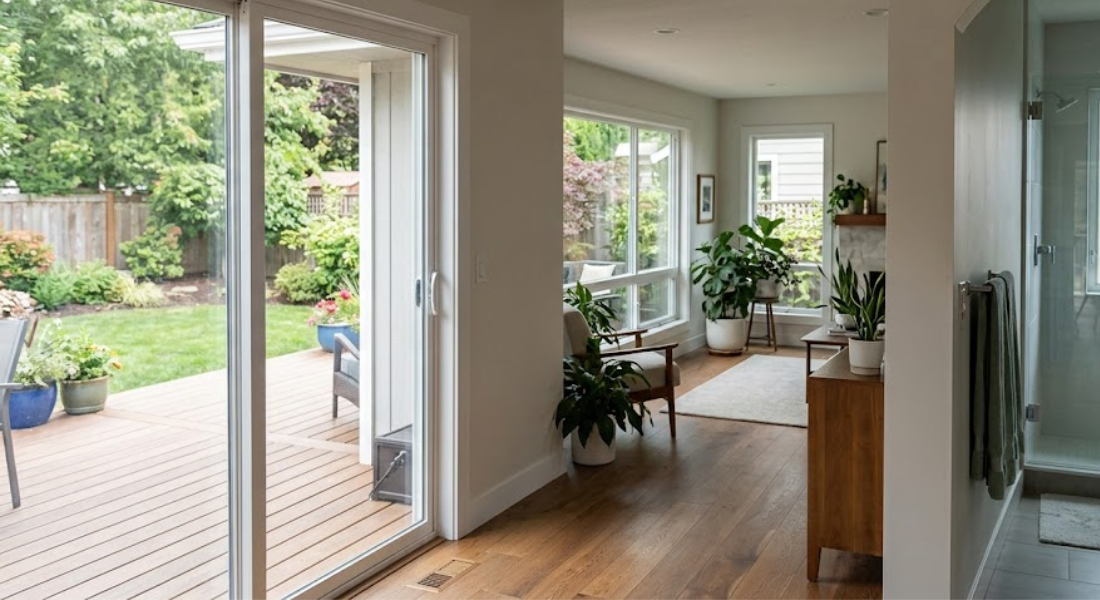
If you have ever wondered why some windows in your home look ordinary while others near your shower or stairway seem thicker or feel different when tapped, the answer usually comes down to safety glazing. Building codes single out specific hazardous locations throughout a home — areas where broken glass is more likely and where the consequences are more severe — and require approved safety glazing in them. Tempered glass is the option most often used, but it is not the only one the code accepts.
Do residential windows have to be tempered glass?
Building codes generally require approved safety glazing in hazardous locations, not tempered glass specifically. Tempered glass is one qualifying option; laminated glass and other approved safety glazing products may also satisfy the requirement. Whether a particular window needs safety glazing depends on its position relative to doors, walking surfaces, stairs, landings and wet areas, and on the code edition your jurisdiction has adopted.
This article is worth reading because window safety rules are easy to get wrong, whether you are planning a bathroom remodel, installing replacement windows, or just trying to understand why your builder specified a certain glass type. Below is where safety glazing is required, what the International Residential Code says about hazardous locations, and how tempered glass compares to the other glazing options that can satisfy the same rule.
Residential Safety Glazing Requirements at a Glance
| Location | What the code generally looks at |
|---|---|
| Doors | Glazing in fixed and operable panels of swinging, sliding and bifold doors is treated as a hazardous location, subject to listed exceptions. |
| Windows adjacent to doors | Glazing with its bottom edge less than 60 inches above the floor and within 24 inches of the door in its closed position, in the plane of the door. |
| Large low windows | Glazing with an exposed area over 9 square feet, a bottom edge less than 18 inches above the floor, a top edge more than 36 inches above the floor, and a walking surface within 36 inches horizontally. |
| Showers, tubs and wet areas | Glazing in doors and enclosures for showers, bathtubs, hot tubs, whirlpools, saunas and steam rooms where the bottom exposed edge is less than 60 inches above the standing or walking surface. |
| Stairs and ramps | Glazing adjacent to a stairway or ramp where the bottom exposed edge is less than 36 inches above the walking surface (R308.4.6), subject to exceptions. |
| Bottom stair landings | Glazing less than 36 inches above the landing and within the applicable 60-inch arc measured from the bottom tread nosing (R308.4.7). |
Each line above is a summary, not the code text. Exact distances, exposed-area thresholds and exceptions vary by code edition, and the authority having jurisdiction has the final word on any specific opening.
What Is Safety Glazing and Why Does the Building Code Require It?
Safety glazing is glass that has been made, tested and marked to resist impact and to break in a way that reduces injury. Tempered glass is one such product: a finished pane is heated and rapidly cooled, which makes it stronger than standard annealed glass and changes how it breaks. Instead of shattering into long, sharp shards, it fragments into small, relatively blunt pieces.
That is the reason codes single out certain positions in a house. In locations where people are likely to walk into, fall against or otherwise contact glass, the risk of serious injury is lower with approved safety glazing than with ordinary annealed glass. Specific sections of the International Residential Code list the hazardous locations where safety glazing — tempered glass, laminated glass, or another approved impact-resistant product — is mandatory. Homeowners, contractors and inspectors all work from those sections rather than from rules of thumb.
Is Safety Glazing Required in the Bathroom?
Yes, in many bathroom locations. The bathroom is one of the clearest examples of a hazardous location under residential codes. Glazing in doors and enclosures for bathtubs, showers, hot tubs, whirlpools, saunas and steam rooms is treated as hazardous where the bottom exposed edge of the glazing is less than 60 inches above the standing or walking surface. That includes shower doors and the glass panels that form part of the enclosure.
The logic is straightforward: bathrooms combine wet, slippery surfaces with glass positioned close to where a person could fall. The requirement is not limited to the enclosure itself — glazing in a bathroom wall within that 60-inch zone around a tub, whirlpool or shower can also be a hazardous location.
There is an important exception in the wet-area rules. Glazing located more than 60 inches horizontally, measured in a straight line, from the water’s edge of a bathtub, hot tub, whirlpool, pool or shower is generally not treated as hazardous on that basis. Distance from the water, not only height above the floor, factors into the answer.
What Counts as a Hazardous Location Under the Building Code?
Beyond bathrooms, the code defines a specific list of hazardous locations: glazing in and around doors, glazing adjacent to stairways and landings, glazing near walking surfaces at low heights, and large glass panels close to the floor. Each has its own measurements and exceptions, which is why professionals refer directly to the code section rather than generalizing.
The common thread is proximity to a standing or walking surface. Glass positioned within a certain vertical or horizontal distance of a floor, landing or walkway is treated differently from glass mounted higher on a wall, since the risk of accidental contact drops with height and distance. Fixed and operable panels are both covered — it does not matter whether the glass opens or is permanently sealed.
Do You Need Safety Glazing Near Doors?
Glazing adjacent to a door is one of the most frequently cited hazardous locations. Glass in an individual fixed or operable panel next to a door is generally hazardous when the bottom edge sits less than 60 inches above the floor and the glazing is within 24 inches of either side of the door, in the plane of the door in a closed position. In plain terms, if a window sits close enough to a doorway that someone could stumble into it while opening or closing the door, it likely needs safety glazing.
There are exceptions. Openings small enough that a 3-inch sphere cannot pass through are generally exempt, since a small decorative pane does not pose the same risk. There are also exceptions for glazing separated from the door by an intervening wall or other permanent barrier, since the barrier removes the hazard the rule addresses.
Is Safety Glazing Required Near Stairways?
Stairways have their own rules, and the 2018 IRC addresses them in two separate sections.
R308.4.6 — glazing adjacent to stairs and ramps. Glazing where the bottom exposed edge is less than 36 inches above the plane of the adjacent walking surface of a stairway, landing between flights of stairs or ramp is treated as a hazardous location. The section carries exceptions, including glazing protected by a complying guard where the glazing is more than 18 inches from the guard, and glazing adjacent to a stairway where it is positioned on the side of the stairway and a handrail is installed between the stairway and the glazing.
R308.4.7 — glazing adjacent to the bottom stair landing. Glazing adjacent to the landing at the bottom of a stairway is treated as a hazardous location where the glazing is less than 36 inches above the landing and within the applicable 60-inch horizontal arc, measured less than 180 degrees from the bottom tread nosing. This section also has an exception for glazing protected by a complying guard where the glazing is more than 18 inches from the guard.
Note the 36-inch figure in both. Earlier guidance and some older write-ups quote 60 inches here, which belongs to other hazardous locations, not to the stairway rules. If you are installing or replacing windows anywhere near a staircase, check these distances carefully before assuming standard glass is acceptable.
Tempered vs. Annealed and Laminated Glass: What’s the Difference?
Annealed glass is standard, untreated glass — the default in non-hazardous locations. It breaks into large, sharp shards, which is exactly why it is not permitted where the code calls for safety glazing.
Tempered glass is heat-treated, which makes it several times stronger than annealed glass and causes it to break into small granular pieces. Laminated glass is a third option, made by bonding glass plies to an interlayer that holds the fragments together when broken, similar to a car windshield. Both tempered and laminated glass can qualify as safety glazing, so the choice between them depends on the application, the tested product data and the code in force. Tempered is the more common choice for residential windows and doors, but it is not the only compliant one. If the terminology is what is tripping you up, our guide to safety glass versus tempered glass explains how the two names relate.
How Do You Know If a Window Is Tempered?
Safety glazing is required to carry a permanent identifying mark, designed so it cannot be removed without being destroyed. The mark is typically etched, sandblasted or ceramic-fired near a corner or edge of the glass, and it identifies the manufacturer along with the standard the pane meets.
If you are checking existing windows — before a renovation, or when trying to determine whether a bathroom window meets current requirements — look closely at each corner for that small etched or stamped mark. In multi-pane assemblies, codes sometimes require only one pane in the unit to carry the full mark, so check every pane rather than assuming they match. How to tell if glass is tempered walks through the practical checks and their limits.
Which Code Applies in Clarksville?
Clarksville currently lists the 2018 International Residential Code for one- and two-family dwellings. Project requirements and amendments should still be confirmed with the City of Clarksville Building & Codes Department.
That matters because adopted editions differ between jurisdictions and change over time, and local amendments can modify what the base code says. The International Building Code, which covers a broader range of structures, contains parallel safety-glazing provisions under different section numbers. Both codes share the same underlying goal: identifying hazardous locations and requiring impact-resistant glazing wherever the risk of injury from broken glass is elevated.
Do Replacement Windows Need Safety Glazing?
Yes, and this is a detail many homeowners overlook. When you replace a window, the new glazing generally must meet current safety glazing requirements even if the original glass in that location was never tempered. This commonly comes up during additions, deck or porch construction, and bathroom remodels, where existing windows and doors near the new work may need to be brought up to current code.
A window swap in a hazardous location is therefore not just a matter of matching the old size and style. Checking with the local building department before finalizing a replacement window order can prevent a failed inspection later in the project.
Looking for Tempered Glass Services in Clarksville, TN?
Allnite Glass helps homeowners in Clarksville with tempered glass replacement, window glass repair, shower glass and custom glass work. If your project requires code-compliant safety glazing, or you need to replace damaged tempered glass, the team can help identify the requirements and obtain correctly specified glass. Contact Allnite Glass to discuss your project in Clarksville, TN.
Key Takeaways
- Codes require approved safety glazing in hazardous locations — tempered glass is one qualifying option, and laminated or other approved products may also qualify.
- Tempered glass breaks into small, relatively blunt pieces instead of sharp shards, which is why it is so commonly specified.
- Bathrooms are a common hazardous location: glazing near tubs, showers, whirlpools and saunas within 60 inches of the walking surface generally requires safety glazing, subject to the 60-inch horizontal exception from the water’s edge.
- Glass near a door is generally hazardous within 24 inches of the door when its bottom edge is less than 60 inches above the floor.
- Stairs use a 36-inch threshold, not 60: R308.4.6 covers glazing beside stairs and ramps, and R308.4.7 covers glazing at the bottom stair landing.
- Safety glazing carries a permanent mark that cannot be removed without destroying it.
- Clarksville currently lists the 2018 IRC for one- and two-family dwellings; confirm requirements and amendments with the City of Clarksville Building & Codes Department.
- Replacement windows must meet current code, so safety glazing is often required even where the original window did not have it.
Sources reviewed
- City of Clarksville — Current Adopted Codes
- 2018 International Residential Code, Section R308.4 — Hazardous Locations (International Code Council)
- 2018 International Residential Code, Sections R308.4.6 and R308.4.7 — Glazing adjacent to stairs and ramps, and glazing adjacent to the bottom stair landing
- 16 CFR Part 1201 — Safety Standard for Architectural Glazing Materials

Expert glaziers sharing glass tips and industry insights.
Ready to Discuss Your Glass Project?
Tell Allnite Glass what you need, where the project is located, and whether the glass can be brought to the Clarksville shop. The team will confirm scope, availability and next steps.
Monday – Friday: 7:00 AM – 5:00 PM · Saturday – Sunday: Closed