How Strong Is Tempered Glass? Strength, Breakage and Limits
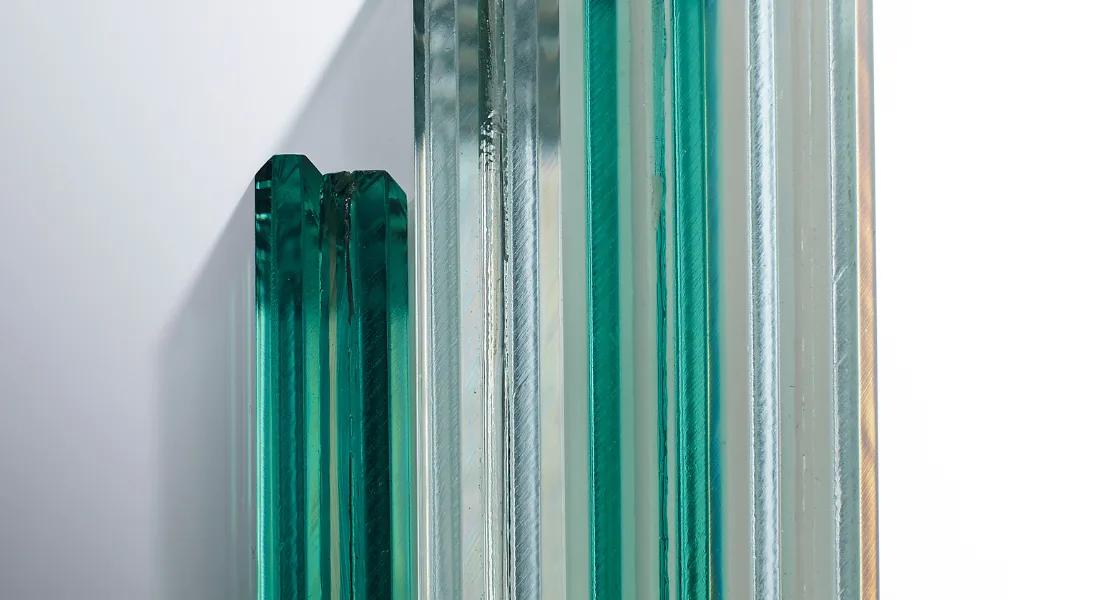
Tempered glass is commonly described by manufacturers as four to five times stronger than comparable annealed glass in resistance to bending and impact. It is stronger, not unbreakable, and there is no universal weight capacity: performance depends on the pane's thickness, dimensions, edge quality, holes, support conditions, fabrication and the type of load applied.
How Strong Is Tempered Glass Compared to Regular Glass?
Tempered glass is commonly described as about four to five times stronger than comparable annealed glass in resistance to bending and impact. That does not mean it is unbreakable or that every tempered panel can carry the same load. Actual strength depends on thickness, dimensions, edge condition, support, fabrication and the type of load.
What does “strong” mean for glass?
Strength can refer to bending resistance, impact resistance, thermal performance or the ability to support a specific load. Those are not interchangeable.
- A small pane supported on four sides does not perform like a large panel supported only at two points.
- A centered distributed load is different from a sharp point impact.
- Holes, notches, edge damage and hardware connections change the stress pattern.
- Thickness alone does not establish a safe design.
Structural glass must be selected for the complete application, not from a generic internet weight chart.
| Annealed glass | Heat-strengthened glass | Tempered glass | |
|---|---|---|---|
| Relative resistance to bending and impact | Baseline | Roughly twice annealed | Commonly described as four to five times annealed |
| How it breaks | Large, sharp shards | Larger pieces that tend to stay in the opening | Many small fragments |
| Can it be cut or drilled after treatment? | Yes | No | No |
| Recognized as safety glazing on its own? | No | No | Yes, when it meets the applicable safety-glazing standard |
| Subject to nickel sulfide spontaneous breakage? | No | No | Rare, but possible |
These are general comparisons. Product performance and code compliance depend on the exact glass, fabrication, installation and applicable project requirements.
Need tempered glass made for a specific application? See our custom-cut glass services or request a project review.
How thermal tempering changes the glass
In thermal tempering, the glass is heated and then rapidly cooled. The surfaces cool first and develop compression while the interior remains in tension. Because cracks must overcome the compressed surface layer before they can propagate, the treated pane can resist higher loads than comparable annealed glass under many conditions.
A single furnace temperature or strength value is only meaningful when it is tied to a specific fabricator’s process and the applicable standard, so this guide does not quote one.
Is tempered glass four or five times stronger?
The “four to five times stronger” statement is a common manufacturer guideline — Vitro Architectural Glass describes tempered glass that way — not a universal project-design value. It should not be treated as an engineering guarantee. Actual strength varies with glass type, thickness, heat treatment, edge quality, surface damage, dimensions, support and load duration.
In practical terms, tempered glass is designed to withstand greater bending and impact loads than comparable annealed glass. For structural decisions, the applicable standard, manufacturer data and engineering review are what govern the specification.
How tempered glass breaks
Annealed glass often forms larger sharp shards when it breaks. Tempered glass is designed to fragment into many smaller pieces, reducing the likelihood of severe cutting and piercing injuries. Small fragments can still cause injury, and the pane can release suddenly when it fails.
Why edges and corners matter
The center area and the edges do not have the same tolerance for damage. Chips, scratches, poor handling, contact with hard hardware or installation stress near an edge can reduce the pane’s reliability.
Edge-related failures are common enough to be worth protecting against, and they are not the same thing as the spontaneous breakage described below.
Edge damage and nickel sulfide inclusions are different
Edge-impact or edge-damage failure begins with physical damage or stress at an edge or corner.
A nickel sulfide inclusion is a rare internal manufacturing defect associated with some delayed spontaneous breakage events in tempered glass.
The causes, inspection and risk-management approach are different. Not every unexplained break is caused by an inclusion, and not every edge-impact failure is inclusion breakage.
Can tempered glass be cut after tempering?
No. Cutting, drilling, notching and edge finishing must be completed before tempering. The final dimensions, holes and polished edges need to be confirmed before the glass is sent for heat treatment. For the full explanation of why tempered glass cannot be cut after tempering, including what to do with a panel that is the wrong size, see the dedicated guide.
When might safety glazing be required?
Safety-glazing rules depend on the product, location, dimensions and code adopted by the jurisdiction. Doors, shower enclosures and other hazardous locations are commonly regulated, but the exact requirement should be confirmed for the project.
For the residential detail, see when tempered glass is required in residential windows.
Tempered glass versus laminated glass
Tempered glass is designed to fragment into small pieces. Laminated glass uses an interlayer that helps hold broken pieces together. Either may be appropriate as safety glazing depending on the application and required standard. They are not interchangeable in every assembly.
For a side-by-side comparison, including the difference between safety glass and tempered glass as terms, see the dedicated guide.
Information needed for custom tempered glass
- Final width and height confirmed by the fabricator or installer.
- Glass thickness and type.
- Edge finish.
- Hole, notch and cutout locations.
- Tint, pattern or coating.
- Support and hardware details.
- Whether the application requires a tested safety-glazing mark or structural design.
Allnite Glass project review
Allnite Glass can review custom glass requirements for residential and commercial projects, and orders or supplies tempered glass to specification. Final availability, fabrication source, safety marking, hardware compatibility and engineering requirements are confirmed after the application and dimensions are reviewed.
You can request a custom glass review with your dimensions and application, or read more about custom-cut glass, shower glass and glass railings and outdoor glass.
Sources reviewed
- U.S. Consumer Product Safety Commission — Tempered Glass Safety Alert (PDF)
- 16 CFR Part 1201 — Safety Standard for Architectural Glazing Materials (GovInfo, PDF)
- Vitro Architectural Glass — Heat-Treated Glass Processes (heat-strengthened vs. tempered)
- Vitro Architectural Glass — Nickel Sulfide and Spontaneous Breakage
- Vitro Technical Document TD-138 — Heat Treated Glass for Architectural Glazing (PDF)
- NIST — Strength of Glass: A Fracture Mechanics Approach (Wiederhorn, NBSIR 74-485)

A family-owned glass company based in Clarksville, Tennessee, sharing practical guidance on residential and commercial glass projects.
Frequently Asked Questions
Tempered glass is designed to withstand greater bending and impact loads than comparable annealed glass, but its actual performance depends on thickness, dimensions, edge condition, fabrication, support and the way the load is applied.
That statement is a common rule of thumb, not a universal design value. Specifications and load decisions should use the applicable product standard and engineering information for the exact glass size, thickness, support and application.
Yes. Tempered glass is stronger, not unbreakable. Severe impact, edge damage, scratches, installation stress, thermal conditions or manufacturing defects can contribute to breakage.
The tempering process creates a surface-compression and interior-tension stress pattern. When the pane fails, that stored stress causes it to fragment into many small pieces instead of the larger sharp shards associated with ordinary annealed glass.
No. Edge chips or impacts are physical damage that can weaken a pane. Nickel sulfide inclusions are rare internal manufacturing defects associated with some spontaneous breakage events. They are separate failure mechanisms.
No. Cutting, drilling, notching and edge finishing must be completed before the glass is tempered. Altering it afterward is likely to cause the pane to break.
There is no single safe weight number. Capacity depends on glass thickness, panel size, support conditions, holes, edge quality, load type and required safety factors. Structural applications require project-specific design.
Safety-glazing requirements depend on the product, location, dimensions and code adopted by the jurisdiction. Doors, shower enclosures and other hazardous locations are commonly regulated, but the exact requirement should be confirmed for the project.
Have a Custom Tempered Glass Project?
Send Allnite Glass the application, dimensions, thickness, edge finish and any hole or hardware details. The team will review the requirements and confirm availability, safety marking and next steps.
Monday – Friday: 7:00 AM – 5:00 PM · Saturday – Sunday: Closed